

 Cable Automotive / Marine
 Cable Lugs
 Cable Lug Assortment Kits
 Cable Lugs Straight Wall Closed
 Cable Glands
 Convoluted Split Tubing
 12/24v Products & Access

 Electrical Connectors
 Solar Powered Products
 LED Lights

 Tools
 Auto Parts & Categories

 Fittings
 Cleaning & Misc
 Clearance & Promotion
Latest News
Best Waterproof Rocker Switches for 12V Setups
Oct
A rocker switch can be one of the smallest parts in a 12V fit-out, yet it often controls equipment you rely on after dark, in bad weather or well off the bitumen. The best waterproof rocker switches are not simply switches with a rubber cover. They are correctly rated for the circuit, sealed where moisture can enter, suited to the panel cut-out, and wired so the switch is not carrying more current than it should.
For a 4WD, caravan, boat or work vehicle, the right choice starts with the environment and the load. A switch for a sheltered dash panel has different requirements from one mounted on an exposed canopy, centre console, marine dash or external service box. Getting that distinction right prevents nuisance failures, corrosion and overheated terminals later.
What makes a rocker switch genuinely waterproof?
“Waterproof” gets used loosely in accessory listings. Check the IP rating rather than relying on the description alone. The first number relates to protection from solids such as dust, while the second relates to water ingress. For example, IP65 is generally protected against low-pressure water jets, while IP67 is designed to tolerate temporary immersion under specified conditions.
That does not mean an IP67 switch makes an entire installation waterproof. Water can still reach the rear terminals through an unsealed panel opening, damaged cable insulation or a poor crimp. The switch body, actuator seal, bezel, terminal cover and panel mounting all matter.
For most internal 4WD and caravan panels, a quality sealed rocker switch with an appropriate front-face rating is usually the practical option. For boats, exposed canopy panels and wash-down areas, choose a higher ingress rating and protect the rear connections with insulated terminals, adhesive-lined heat shrink or a sealed enclosure where suitable.
The front seal is only half the job
Many rocker switches seal around the actuator but leave spade terminals exposed at the back. That can be acceptable inside a dry cabin, but it is less suitable in a marine compartment or a canopy that sees dust, condensation and rain. If the switch is exposed, plan the installation as a system.
Use correctly sized terminals with a firm crimp, support the cable so vibration is not carried by the terminals, and leave a drip loop where water could track along the cable. Dielectric grease can help protect appropriate connector interfaces, but it is not a substitute for a sealed switch or sound termination.
Best waterproof rocker switches by application
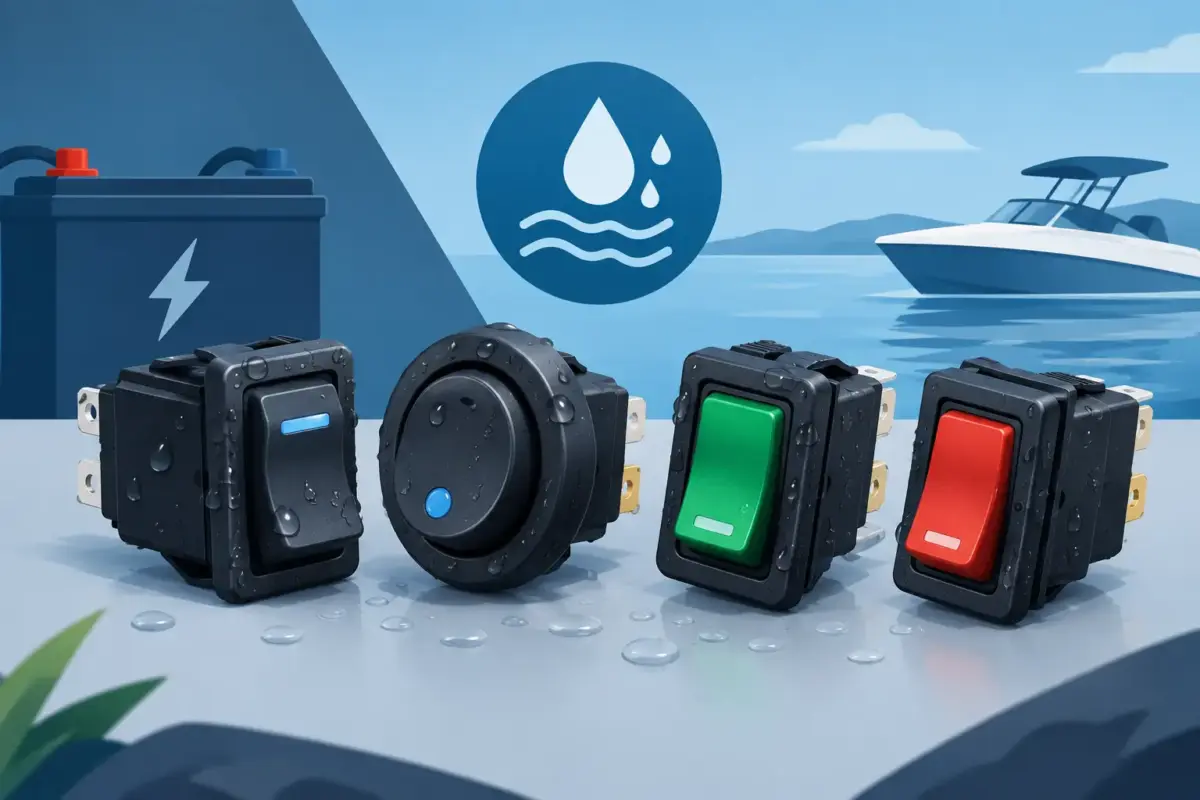
There is no single best switch for every job. The best waterproof rocker switches are the ones that suit the voltage, current draw, switching function and mounting location.
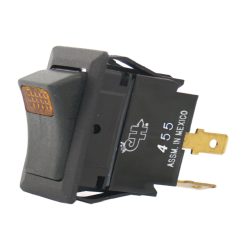
For a simple accessory circuit such as LED camp lighting, a single-pole single-throw, or SPST, on-off rocker switch is often all that is required. These are common for switching a relay trigger, a low-current light circuit or a compressor control circuit. An illuminated version makes it easier to identify the circuit at night, particularly on a multi-switch panel.
For circuits that need two positions or a changeover function, look at SPDT or double-pole options. A momentary rocker switch is better suited to functions that should only operate while held, such as a horn, winch control input or intermittent auxiliary function. Do not substitute a latching on-off switch where a momentary control is required.
For marine and external-use applications, a switch with a sealed actuator, substantial housing and clearly stated IP rating is worth the extra attention. Salt spray is especially unforgiving. A switch may continue to work after a few wet trips, then develop green corrosion at the terminals or intermittent internal contacts months later.
In a 24V truck, plant or industrial application, confirm the switch is rated for 24V DC. A switch may physically fit and appear suitable but have an illumination circuit designed only for 12V. Select the right LED voltage or use a compatible arrangement so the indicator does not fail prematurely.
Match the current rating to the real circuit
The current rating printed on a switch is a key specification, but it needs to be read carefully. DC switching is harder on contacts than AC switching because the electrical arc does not cross zero in the same way. A switch that carries an impressive AC rating may have a much lower DC rating.
Check the manufacturer’s rating at the voltage you are using. Then compare it with the expected continuous current of the accessory, not just the fuse size. A 20A fuse does not mean a small rocker switch is automatically suitable for a 20A load.
High-draw accessories such as compressors, driving lights, large light bars, inverters, pumps and electric fans are often better controlled through a relay. In that arrangement, the rocker switch only handles the relay coil current, while the relay and correctly fused power cable manage the main load. It reduces stress on the switch contacts and allows a tidier, safer control circuit.
As a practical rule, allow headroom rather than selecting a switch that is working at its maximum rating every time the accessory runs. Motor loads can draw a higher start-up current than their normal running current. If you are unsure, use the switch to trigger a suitably rated relay.
Illumination and terminals need checking too
An illuminated rocker may have separate terminals for power input, switched output, earth and an independent dash-light feed. Others use an internal earth arrangement or only illuminate when the switch is on. Read the terminal markings and wiring diagram before cutting cable.
This matters when building a panel with several accessories. You may want the label backlight to operate with the vehicle’s park lights, while the switched indicator only comes on when that circuit is live. That setup is useful at night but requires the correct switch type and a properly fused feed.
Terminal style also affects installation quality. Standard 6.3 mm spade terminals are widely available and simple to service. However, ensure the terminal suits the blade thickness and cable size. A loose female spade generates resistance and heat, particularly on a higher-current circuit.
Choose the right panel fit and switching layout
Before ordering, measure the existing aperture rather than estimating. Rocker switches are commonly sold in standard panel cut-out sizes, but dimensions vary between miniature, Contura-style, Carling-style and generic automotive designs. Bezel shape, retaining clips and panel thickness can all affect whether the switch locks in properly.
A clean panel layout also makes fault-finding easier. Group related functions together: lighting, water pump, fridge supply, compressor and charging controls should not be scattered without reason. Use clearly marked legends that match what the circuit actually controls. A switch labelled “AUX” may be fine during a quick install, but it is not helpful on a dark track or when someone else has to diagnose the vehicle.
Where multiple accessories are fitted, consider whether a pre-wired switch panel is genuinely useful or whether individual switches better suit the job. Panels can save time and improve presentation, but individual components give more flexibility for custom layouts, unusual loads and future additions.
Wiring practices that keep the switch reliable
A good waterproof rocker switch still depends on the wiring behind it. Fuse every positive feed as close as practical to the power source. Size cable to the load, cable run length and allowable voltage drop, especially for 12V equipment where voltage loss is more noticeable than in higher-voltage systems.
Keep control wiring separate from high-current power cables where practical, and protect cable passing through metal with grommets or conduit. In a touring vehicle or caravan, vibration is constant, so secure looms at regular intervals and avoid unsupported terminals hanging behind a panel.
If the switch controls a relay, fuse the relay supply and protect the switch feed as required by the circuit design. Do not rely on the switch itself as a circuit-protection device. Its role is to open and close the circuit, not to protect cable from a short circuit.
For trade installations and serious DIY work, use a multimeter before final assembly. Confirm the supply voltage, earth continuity, switched output and illumination behaviour. It takes a few minutes and can save stripping out a finished dash panel to correct a reversed terminal or missing earth.
A practical buying checklist
Before selecting a switch, confirm these points:
- The system voltage is 12V or 24V DC, and the switch and illumination are rated accordingly.
- The switch has an IP rating appropriate for its actual mounting location.
- Its DC current rating suits the load, or it will be used to trigger a relay.
- The switching action is correct: latching, momentary, on-off-on or changeover.
- The panel cut-out, bezel dimensions and terminal arrangement suit the installation.
- The terminals, cable, fuse and any relay are sized for the circuit.
Bluebar Industries supplies practical 12V and 24V electrical components for the sort of installations where these details matter, from touring and caravan fit-outs to workshop and trade repairs.
A waterproof rocker switch should disappear into the job once it is installed: easy to identify, positive to operate and still dependable after corrugations, rain, dust and repeated use. Choose the switch around the circuit and the environment, then give the wiring behind it the same level of attention.