

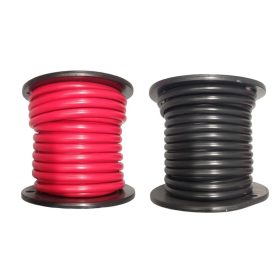
 Cable Automotive / Marine
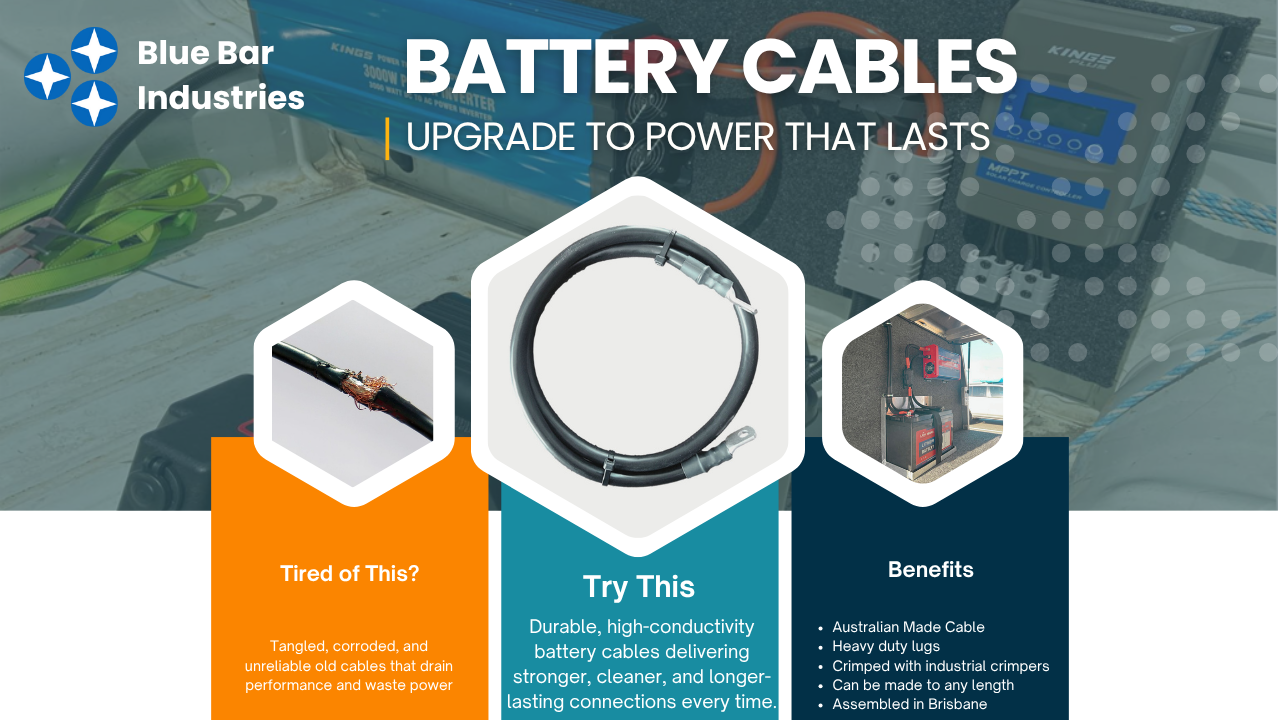
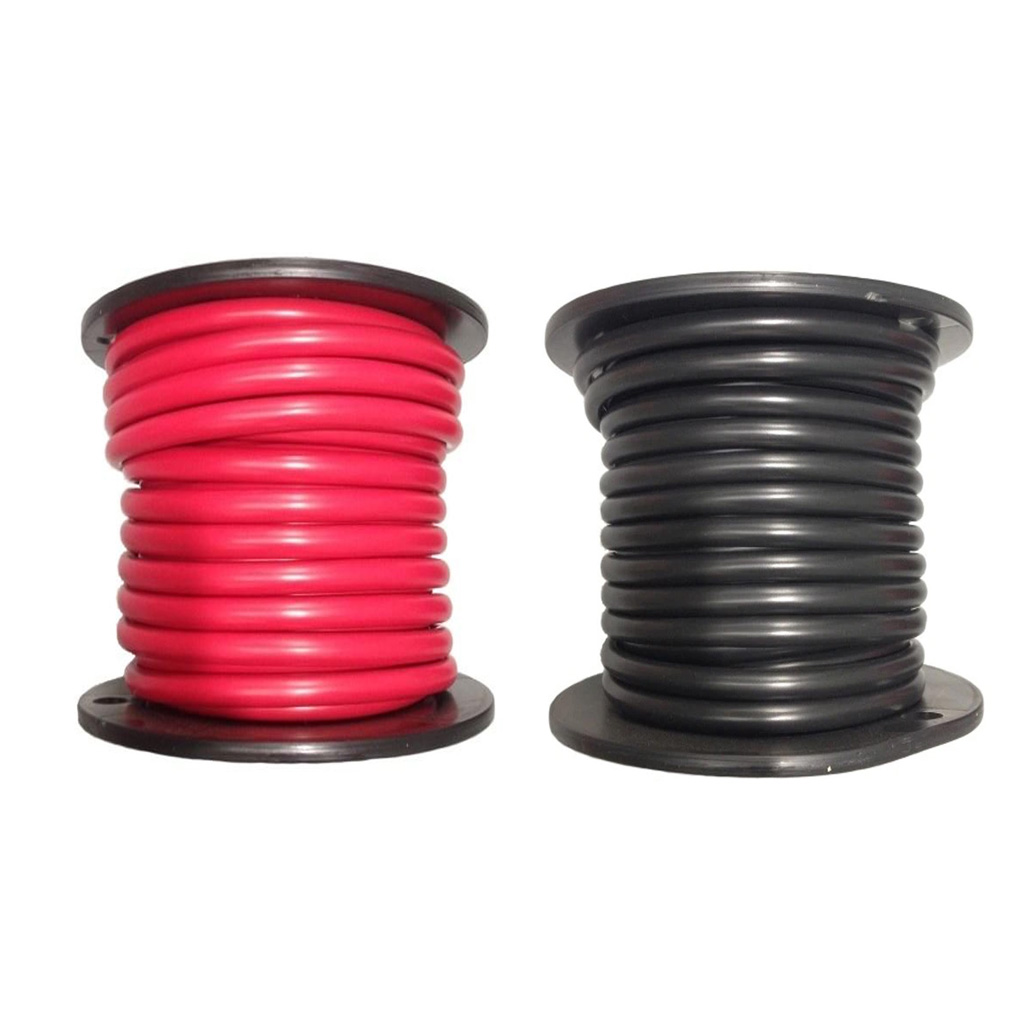
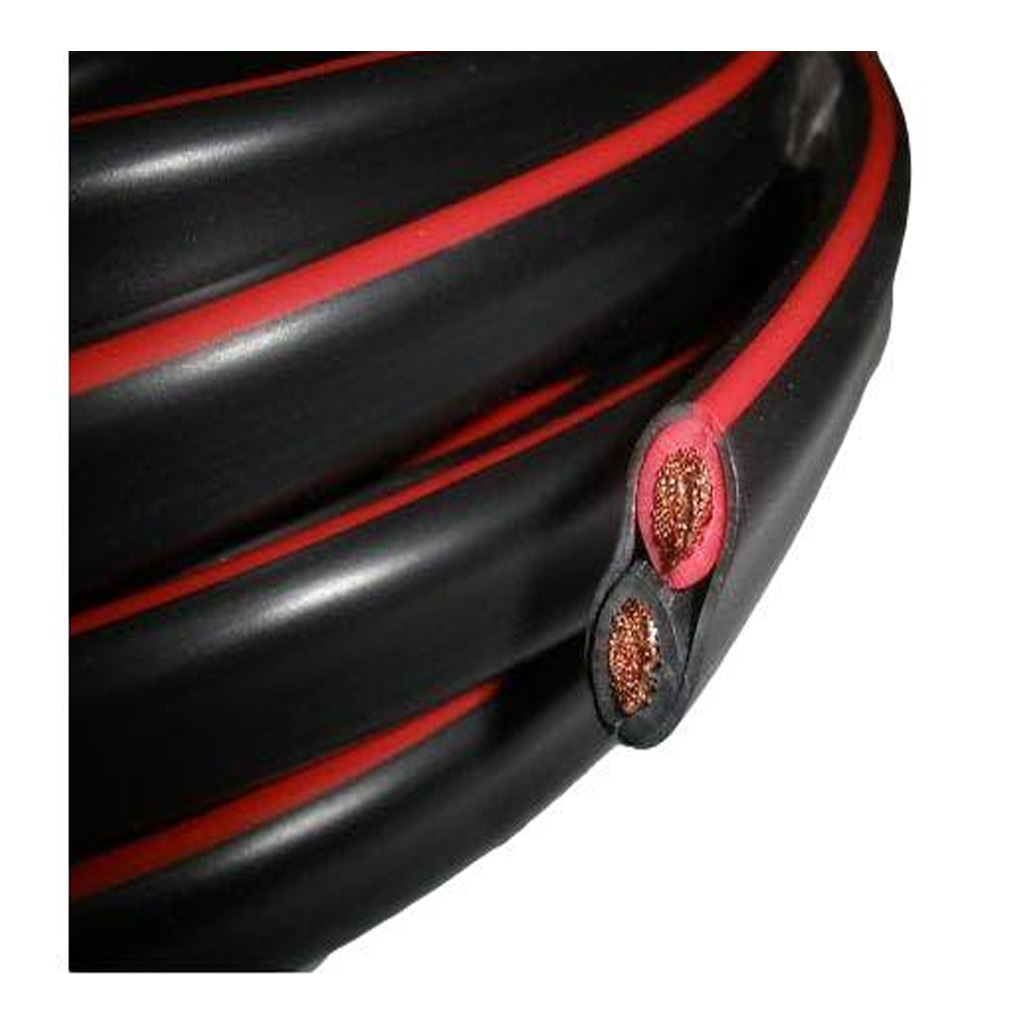
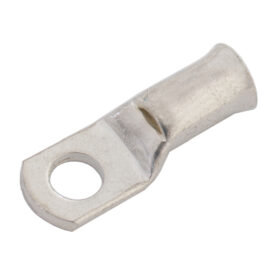 Cable Lugs
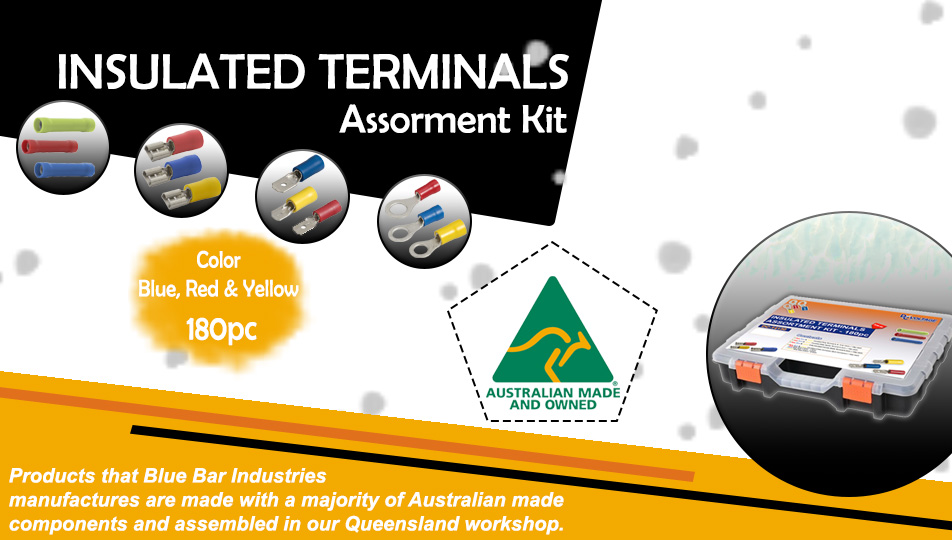
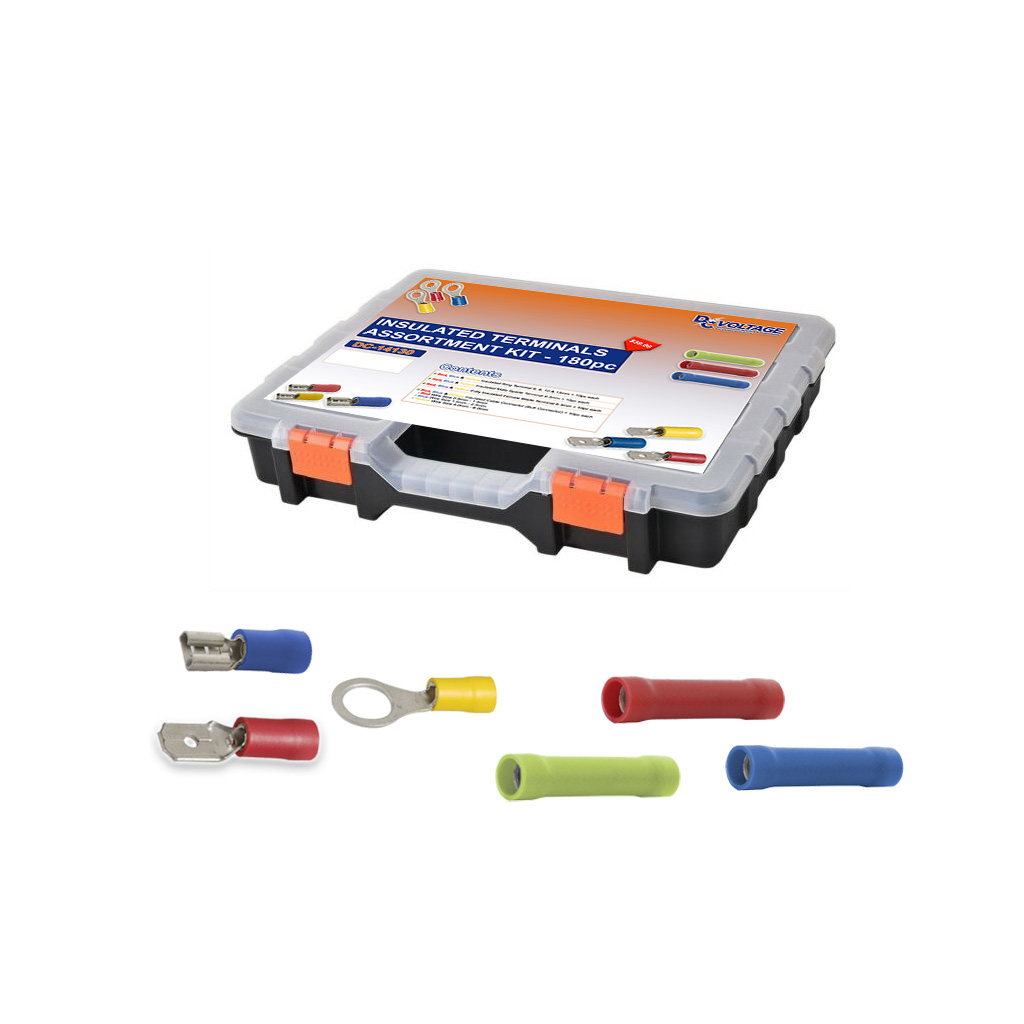
 Cable Lug Assortment Kits
 Cable Lugs Straight Wall Closed
 Cable Glands
 Convoluted Split Tubing
 12/24v Products & Access
 Electrical Connectors
 Solar Powered Products
 LED Lights

 Tools


 Auto Parts & Categories

 Fittings
 Cleaning & Misc
 Clearance & Promotion
Latest News
Automotive Electrical Connectors That Last
Jul
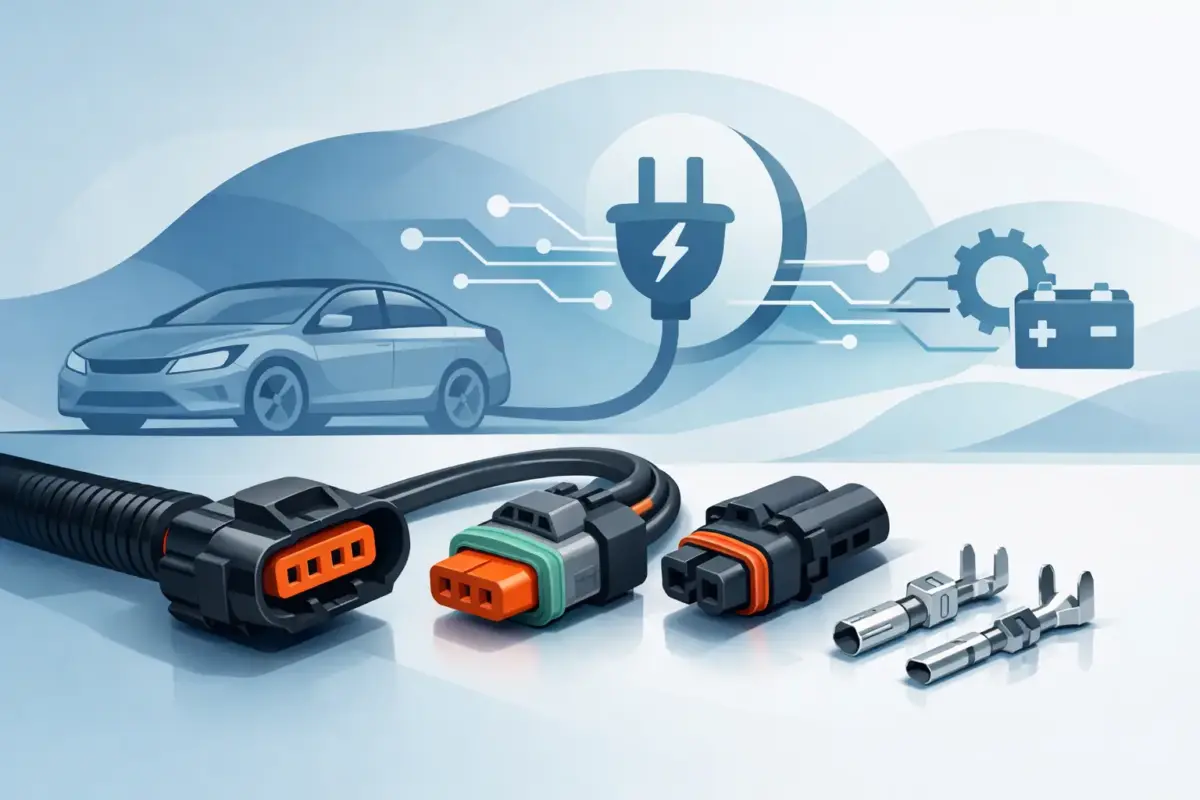
A fridge cutting out on corrugations, trailer lights dropping in and out, or a dual-battery setup that works fine in the shed but not on the track usually comes back to one thing – poor automotive electrical connectors. In 12V and 24V systems, the connector is often the smallest part in the circuit, but it carries a big share of the risk. If the fit is loose, the seal is poor, or the current rating is wrong, the whole setup becomes harder to trust.
That matters whether you are wiring a 4WD, fitting out a caravan, repairing a work ute, or maintaining a fleet vehicle. The right connector makes installation cleaner, fault-finding faster, and long-term reliability far better. The wrong one gives you heat, voltage drop, corrosion and repeat jobs.
Why automotive electrical connectors matter
A connector does more than join two wires. It has to maintain contact pressure, manage current load, resist vibration, and in many cases keep out dust and moisture. On a vehicle or mobile power setup, those demands are constant. Heat cycles under the bonnet, road spray, red dust, salt air and rough tracks all test the quality of the connection.
This is why connector choice should never be treated as an afterthought. A cheap terminal might look fine on day one, but if the metal quality is poor or the locking system is weak, failure is only a matter of time. That is especially true in higher-draw circuits such as fridges, inverters, compressors, lighting harnesses and charging lines.
Good connectors also make servicing easier. When circuits are built with suitable plugs, terminals and housings, components can be removed, tested and replaced without cutting and rejoining cable every time. For trade workshops and installers, that saves labour. For DIY users, it cuts down on frustration.
The main types of automotive electrical connectors
Not every connector suits every job. Matching the connector to the application matters more than choosing whatever is close at hand.
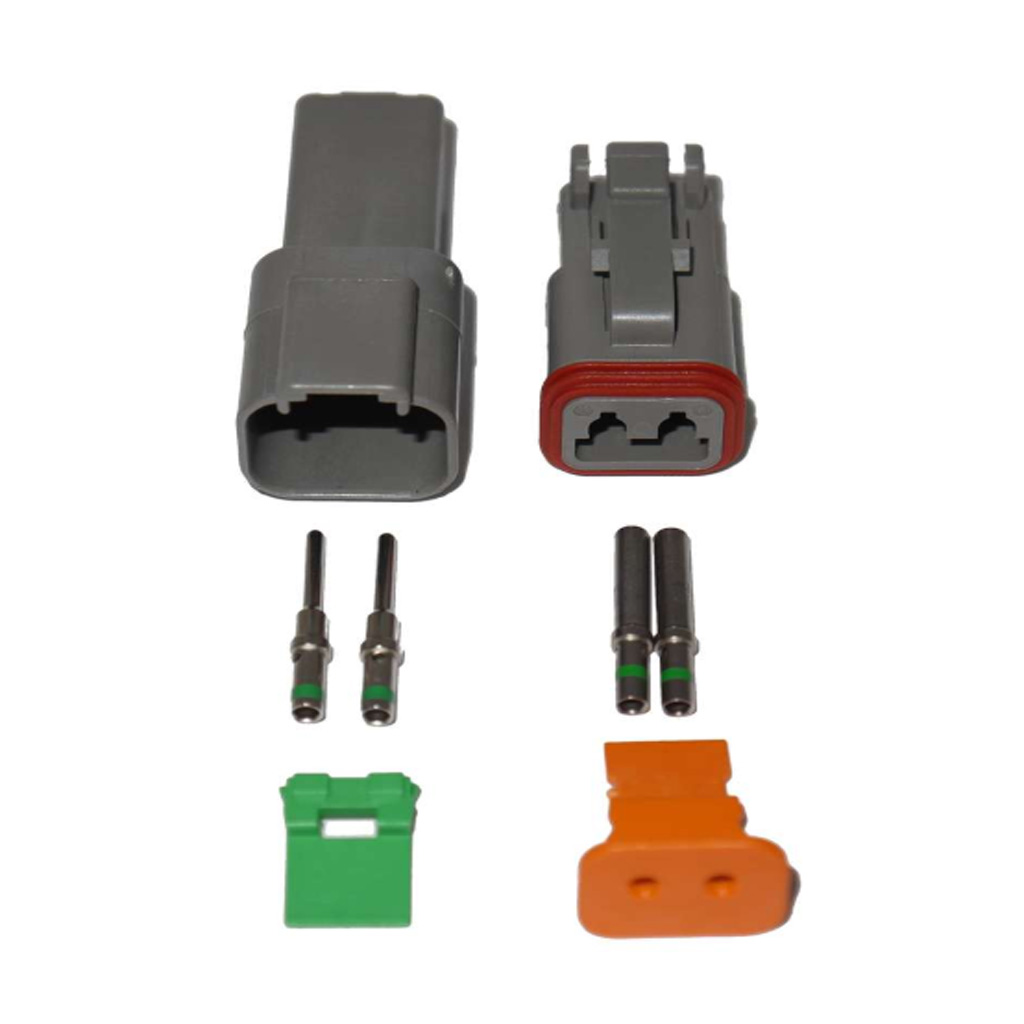
Two-pole DC connectors
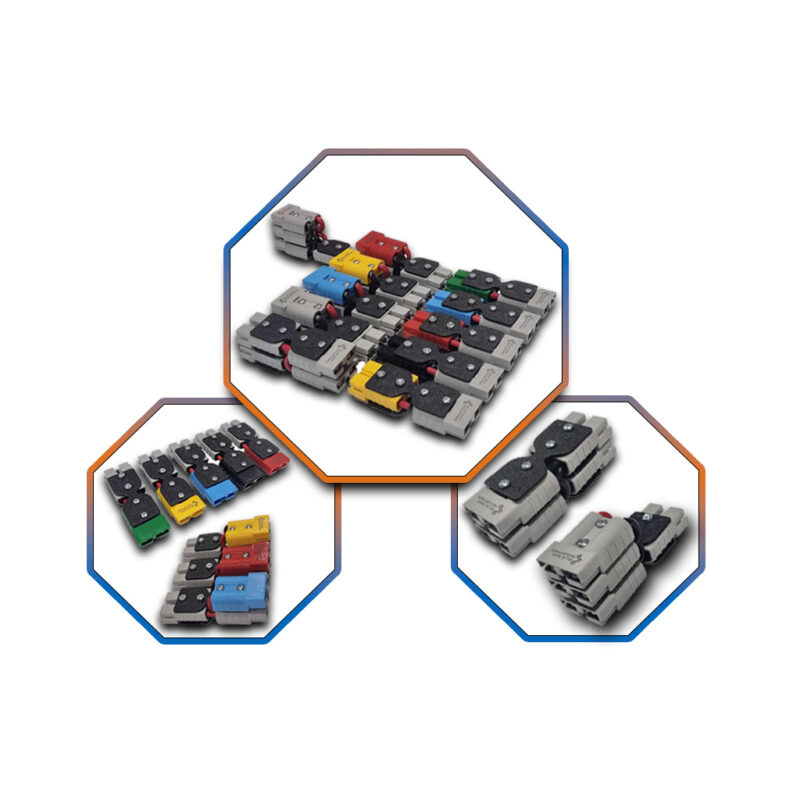
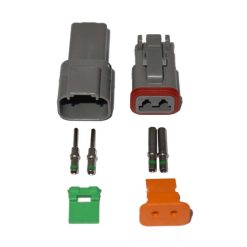
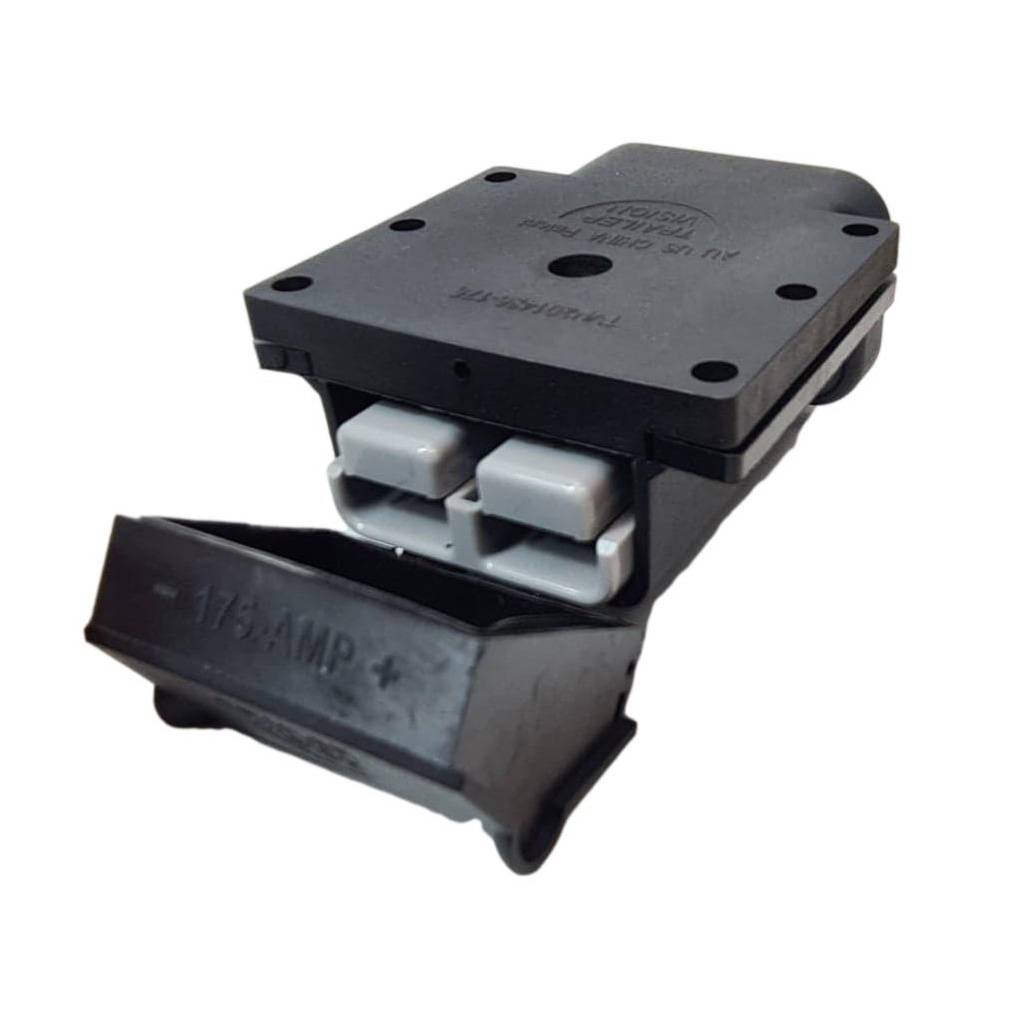
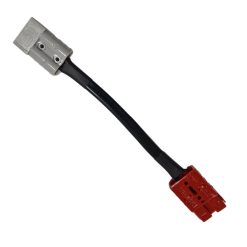
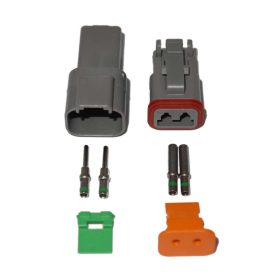
These are common in 12V and 24V accessory systems where a secure, quick-connect power link is needed. They are widely used for battery charging, portable fridges, solar inputs, canopies, compressor feeds and caravan connections. In setups where current draw and repeated connect-disconnect use are expected, a quality two-pole connector is often the practical choice.
The key is choosing the correct current rating and cable size compatibility. A connector rated for the load on paper can still underperform if the terminal does not suit the cable or the crimp is poor.
Insulated terminals and lugs
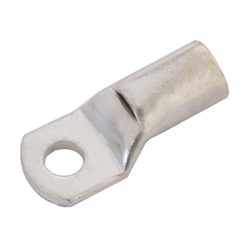
Ring terminals, spade terminals, blade terminals and butt connectors are still standard across automotive and workshop wiring. They are useful, compact and cost-effective, but they need to be selected carefully. Thickness of metal, insulation quality and correct crimp profile all affect performance.
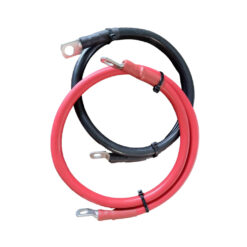
For battery connections and earth points, lugs need to match both stud size and cable size. Too loose on the stud and the connection can move. Too small for the cable and you end up trimming strands, which is never the right answer.
Sealed plug-and-socket connectors
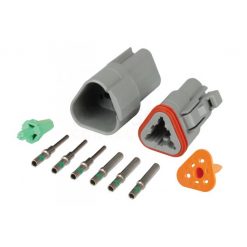
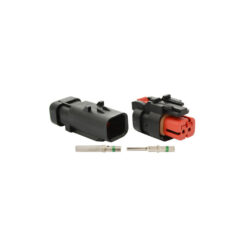
Where water, dust and engine bay grime are part of the environment, sealed connectors are often the better option. These are commonly used for lighting, sensors, pumps, trailer wiring, marine applications and under-bonnet accessory circuits. A decent seal helps, but only if the connector is assembled properly and the cable entry suits the insulation diameter.
There is a trade-off here. Sealed connectors offer better environmental protection, but they can be slower to assemble and require the right tooling for consistent results.
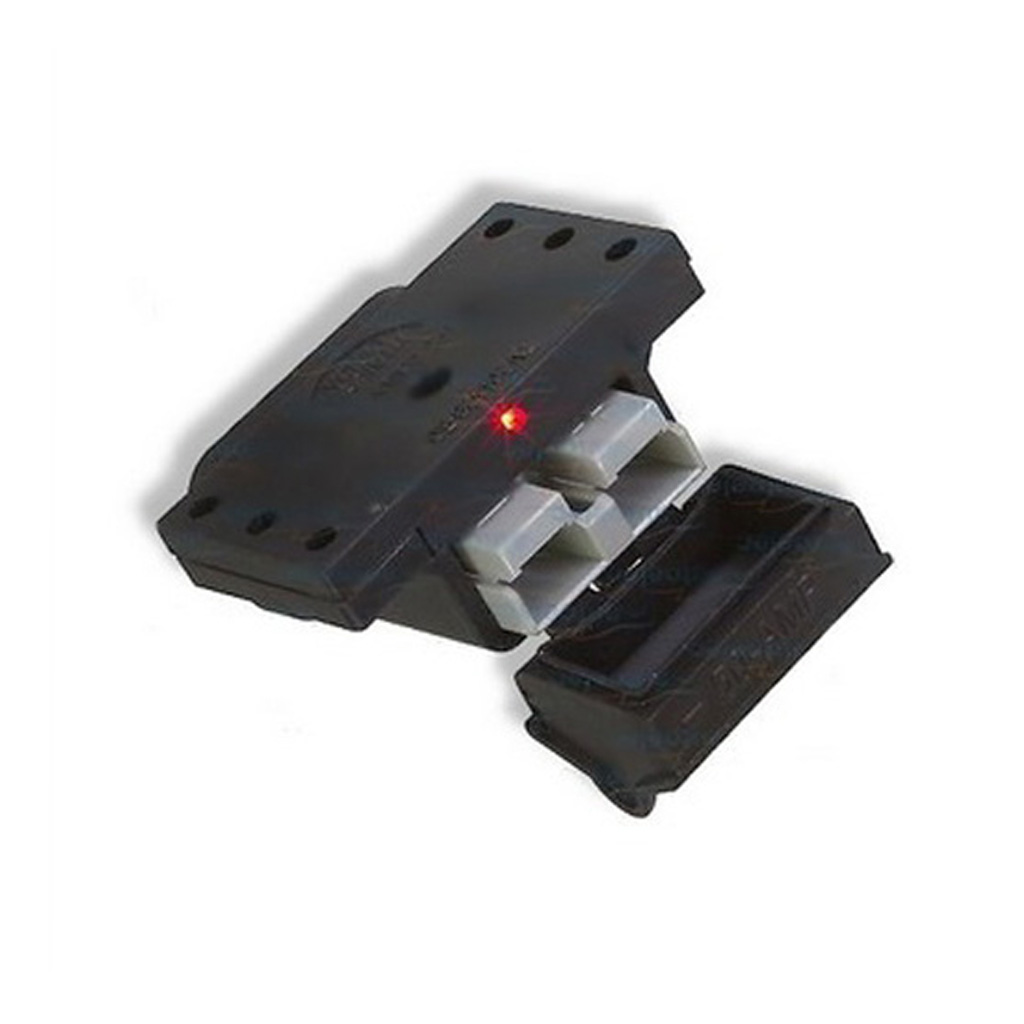
Trailer and auxiliary connectors
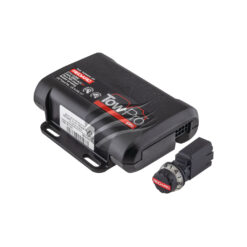
Trailer plugs, sockets and adaptor-style connectors are a category of their own. They need to handle vibration, weather exposure and repeated coupling. In towing applications, reliability is less about clever design and more about secure contacts, proper strain relief and correct pin allocation.
If a trailer plug is exposed near the drawbar, corrosion resistance becomes a bigger factor. If it is on a work trailer that is connected and disconnected constantly, mechanical durability starts to matter more.
Choosing automotive electrical connectors for Australian conditions
A setup that survives city commuting may not last long in the Pilbara, on a coastal boat ramp, or behind a caravan doing long kilometres across corrugated roads. Australian conditions are hard on wiring, so connector selection needs to reflect that.
Current rating should be the starting point, but it is not the only factor. You also need to consider voltage drop, cable size, ambient heat, mounting location and exposure. A connector on an internal drawer system in a canopy has a different job to one mounted near a chassis rail or behind a bull bar.
Material quality matters more than many buyers realise. Better terminal plating helps resist corrosion. Better spring tension helps maintain contact over time. Better housings resist cracking, UV exposure and repeated use. These details are easy to ignore when comparing parts on price alone, but they are usually what separates dependable gear from parts that fail early.
For trade buyers and serious DIY installers, standardisation is worth thinking about as well. If you use the same style of connectors across fridges, solar leads, accessory feeds and battery links where appropriate, fault-finding and future expansion become much simpler.
Common mistakes that cause connector failure
Most connector failures are not mysterious. They come from a small number of avoidable issues.
The first is using a connector that is undersized for the load. This creates heat, resistance and voltage loss. The second is poor crimping. Even a good connector will fail if the terminal is crushed with the wrong tool or not compressed evenly. Soldering is sometimes treated as a fix for bad crimping, but in automotive environments it is not always the best answer, especially where vibration is high.
Another common mistake is mixing components that were never designed to work together. A terminal might fit into a housing loosely enough to click, but if it is not the correct part, retention and contact pressure can be compromised. The same goes for cable that is slightly too small or too large for the terminal barrel.
Sealing errors are also common. If the wire seal does not suit the cable insulation diameter, water and dust can still get in. If the connector is mounted where the cable flexes constantly and there is no strain relief, the failure may happen in the conductor just behind the terminal rather than in the connector itself.
Installation quality matters as much as the connector
A quality connector cannot compensate for poor installation. Clean cable preparation, the right strip length, correct crimp die, proper insertion depth and sensible routing all matter. So does supporting the cable so the connector is not carrying the full mechanical load.
In higher-current circuits, every joint should be treated as a potential point of resistance. That means checking that the conductor is fully inserted, the crimp is mechanically sound, and the finished joint is protected from rubbing and movement. Heatshrink, conduit, cable protection and proper mounting clips are not just there to make the job look tidy. They help the system last.
This is where buying from a specialist supplier makes a difference. The practical benefit is not only access to the connector itself, but also the matching terminals, cable sizes, protection products and tooling that allow the job to be done properly. For many customers, that is the difference between building a circuit once and rebuilding it later.
What to look for before you buy
If you are comparing automotive electrical connectors, start with the actual application rather than the catalogue image. Ask what current the circuit will carry, where the connector will live, how often it will be unplugged, and what cable size you are using. Then check whether the connector is sealed or unsealed, whether replacement terminals are available, and whether you have the right tool to assemble it.
It also helps to think one step ahead. If you plan to add solar, a battery charger, extra lighting or rear power outlets later, it may be smarter to choose a connector system that gives you room to expand. The cheapest option today can become the expensive one if it forces a rework six months down the track.
For workshops, fleet maintenance and frequent installers, consistency across connector types can reduce parts confusion and speed up service work. For recreational users, reliability is usually the priority – because a failed connector at camp, on the boat or out on a station track is never convenient.
Bluebar Industries works with customers who need these parts to perform in the real world, not just on a bench test. That means thinking in terms of load, environment, serviceability and fit-for-purpose component choice.
When you are building or repairing a 12V or 24V system, treat the connector like a critical part of the circuit, because it is. Get that choice right early, and the rest of the installation has a much better chance of staying reliable when conditions stop being easy.