

 Cable Automotive / Marine
 Cable Lugs
 Cable Lug Assortment Kits
 Cable Lugs Straight Wall Closed
 Cable Glands
 Convoluted Split Tubing
 12/24v Products & Access

 Electrical Connectors

 Solar Powered Products
 LED Lights


 Tools


 Auto Parts & Categories

 Fittings



 Cleaning & Misc
 Clearance & Promotion
Latest News
Top Heavy Duty Jump Packs for Australian Work
Nov
A jump pack earns its place when the battery is flat at a remote camp, on a job site before daylight, or in a workshop with a vehicle blocking a bay. The top heavy duty jump packs are not simply the ones with the biggest number printed on the box. They need enough real starting capacity for the engine, leads and clamps that handle regular use, and charging hardware that will still be practical months after purchase.
For Australian 4WD, fleet, trade and workshop use, the right unit depends on whether you are waking up a petrol ute, a high-compression diesel, a 24V truck or machinery with batteries that have been neglected. Start with the vehicle and use case, then compare the specifications that affect performance rather than buying on claimed peak amps alone.
What makes a jump pack genuinely heavy duty?
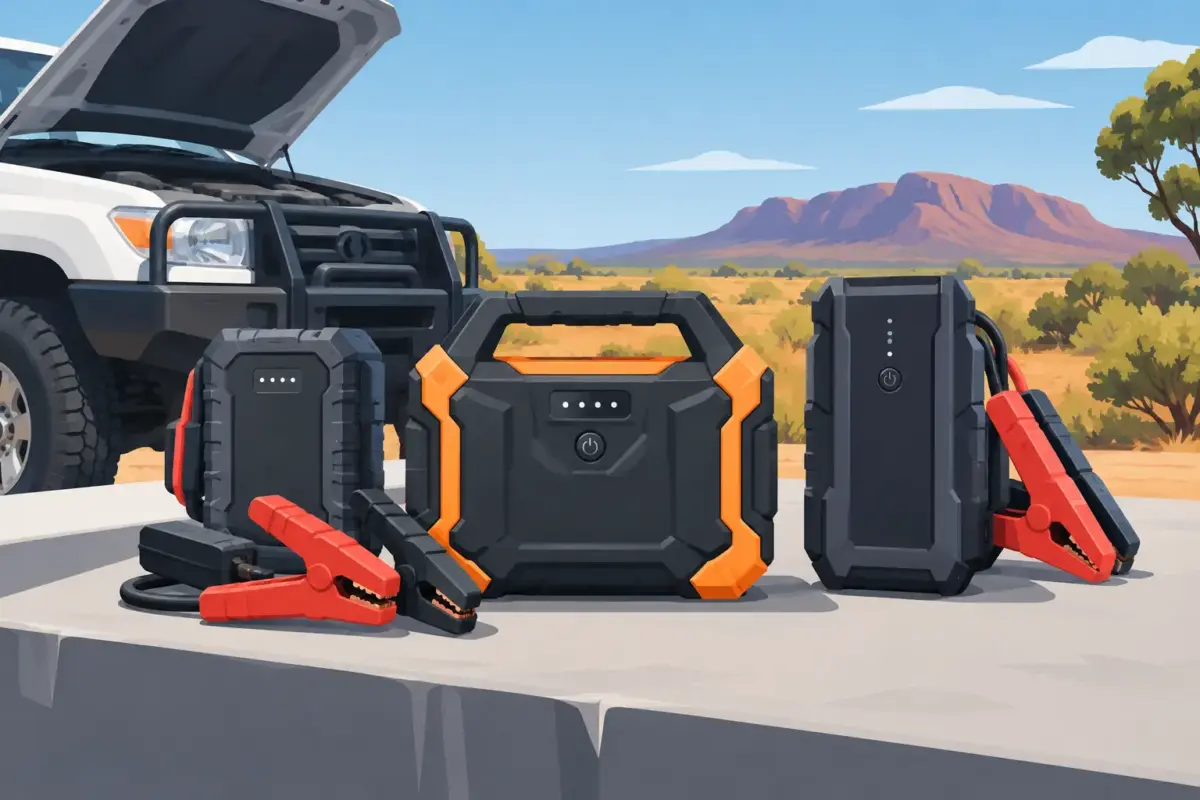
A compact lithium jump starter is handy in a glovebox or touring kit. A heavy-duty jump pack is built for repeated starts, larger engines and tougher handling. It commonly has a higher-capacity battery, more substantial clamps and leads, better protection circuitry and a housing suited to workshop or field use.
That does not automatically mean the biggest unit is the best buy. Large lead-acid booster packs can offer useful reserve capacity and tolerate frequent professional use, but they are heavy, take up room and need regular charging. Lithium packs are lighter and often deliver high cranking output for their size, making them ideal for service vehicles and 4WD touring. Their trade-off is that they must be stored and charged within their specified temperature range, and some small models do not have the reserve for repeated hard starts.
For a workshop or fleet vehicle, choose a pack based on the worst likely job rather than the average one. A unit that starts a healthy 2.0L petrol engine may not be enough for a cold diesel with low batteries. If the pack is only for an emergency restart before a battery test or replacement, a compact lithium unit can be a sensible fit. If it will be used all day across multiple vehicles, capacity, lead quality and recharge time matter more.
Top heavy duty jump packs: specifications that matter
Voltage comes first
Most passenger vehicles, 4WDs, caravans and light commercial vehicles use a 12V starting system. Trucks, larger plant and some commercial equipment may use 24V. A 12V jump pack must never be connected to a 24V system. It can damage the pack, vehicle electronics or both.
Some heavy-duty boosters offer selectable 12V and 24V output. These are useful for mixed fleets, but only when the operator understands the system being connected. Check the pack has clear voltage selection, protected clamps and instructions that suit professional use. Guessing at battery configuration is an expensive way to find the wrong setting.
Cranking performance, not just peak amps
Peak amp figures are widely advertised, but they do not tell the full story. A brief peak output under test conditions is different from the sustained current needed to crank a cold diesel. Look for a stated engine-size recommendation, starting current where supplied, and suitability for petrol or diesel engines.
A reputable manufacturer will usually specify the maximum engine capacity, whether the pack supports diesel engines, and the number of starts available from a full charge. Treat these figures as a guide, not a guarantee. Battery condition, engine temperature, cable connection and engine health all affect the result.
For large-capacity diesels, fleet vans and machinery, avoid selecting a unit solely because it claims an impressive peak number. Heavier leads, strong clamps and a battery with adequate usable capacity generally tell you more about whether it will perform under load.
Clamp and lead construction
Cheap, thin clamps create resistance and heat where you least want it. A proper heavy-duty jump pack should have firm, well-insulated clamps with a positive bite on battery terminals or designated jump points. Leads should be flexible enough to use in tight engine bays, yet thick enough to carry cranking current without becoming hot.
Cable length is also practical. Short leads can be fine in a passenger car, but can be frustrating around dual-battery installations, under-seat batteries, machinery compartments or vehicles parked close together. Longer leads improve access, although very long leads must be correctly sized to limit voltage drop.
Inspect the clamp jaws, cable strain relief and connection into the pack. These are the parts that take the abuse in a workshop, on corrugated tracks and around oily engine bays. A flashy display is less useful than clamps that still grip properly after regular use.
Protection features that prevent expensive mistakes
Reverse-polarity protection is essential. It alerts or prevents operation when the clamps are connected positive-to-negative. Short-circuit, over-current and spark protection are also worthwhile, particularly where several people may use the pack.
Many lithium packs include an intelligent clamp module that controls output until it detects a valid connection. This adds a useful layer of protection, but it can also refuse to operate on a completely flat battery. Some models include a manual override or boost mode for this situation. That function should only be used when you have confirmed polarity and understand the risk, as it bypasses some normal safeguards.
A built-in work light is useful when fault-finding after dark, but it should not decide the purchase. Consider it a convenience feature alongside USB charging ports or a 12V accessory outlet. The core job remains delivering safe, reliable starting power.
Match the pack to the job
A touring 4WD owner generally benefits from a compact lithium jump pack that fits in a recovery kit, stays charged for long periods and can start the vehicle without relying on a second car. Choose one rated for the engine size and keep it protected from extreme heat inside the cabin or canopy.
For a mobile auto electrician or mechanic, a larger lithium unit or workshop booster can make more sense. It needs to handle multiple jobs between charges and have leads that reach awkward battery locations. A pack with clear status indication is useful when it is being grabbed quickly from a service vehicle.
Fleet operators should consider how the pack will be managed. A single powerful booster left uncharged is not a fleet solution. Establish a charging routine, nominate where the unit lives and inspect the clamps and leads as part of routine vehicle checks. For mixed light and heavy vehicles, separate 12V and 24V equipment can sometimes be simpler and safer than a multi-voltage unit shared by everyone.
For workshop use, battery diagnosis still matters. A jump pack gets a vehicle moving, but it does not repair a sulphated battery, loose terminal, faulty alternator or parasitic draw. If a vehicle repeatedly needs a boost, test the battery and charging system before sending it back on the road.
Safe use in the workshop and the bush
Before connecting a jump pack, switch off accessories, inspect the battery for damage and ensure the area is ventilated. Do not boost a swollen, cracked or leaking battery. Confirm the system voltage, connect the positive clamp to the positive terminal or designated jump point, then connect the negative clamp to a suitable earth point as directed by the vehicle and jump pack manufacturer.
Keep hands, loose clothing and leads clear of belts and fans before cranking. Use short crank attempts rather than holding the starter continuously. If the vehicle will not start after several attempts, stop and investigate. Continuing to crank can overheat leads, flatten the pack and conceal a fault that requires proper attention.
After a successful start, remove the clamps in the correct order and recharge the pack promptly. Do not assume the alternator has restored the vehicle battery simply because the engine is running. A seriously discharged battery may need controlled charging and testing.
Charging and storage decide whether it works when needed
Every jump pack should be checked before a trip, shift or call-out. Lithium units retain charge well, but should still be topped up according to the manufacturer’s schedule. Lead-acid booster packs need more regular attention and should not be stored discharged.
Keep the pack dry, clean the clamp jaws when needed and store it where it will not be crushed by gear in the back of a ute. Avoid leaving any battery product baking in direct summer heat. If it lives in a service vehicle, make its charge check part of the same routine as checking tyre pressures, recovery gear and battery terminals.
A well-chosen jump pack is cheap insurance, but it works best alongside sound battery maintenance and correctly sized charging leads. Select one that suits the largest vehicle you genuinely need to start, keep it charged, and it will be ready when a flat battery tries to stop the day.