

 Cable Automotive / Marine
 Cable Lugs
 Cable Lug Assortment Kits
 Cable Lugs Straight Wall Closed
 Cable Glands
 Convoluted Split Tubing
 12/24v Products & Access

 Electrical Connectors
 Solar Powered Products
 LED Lights

 Tools


 Auto Parts & Categories
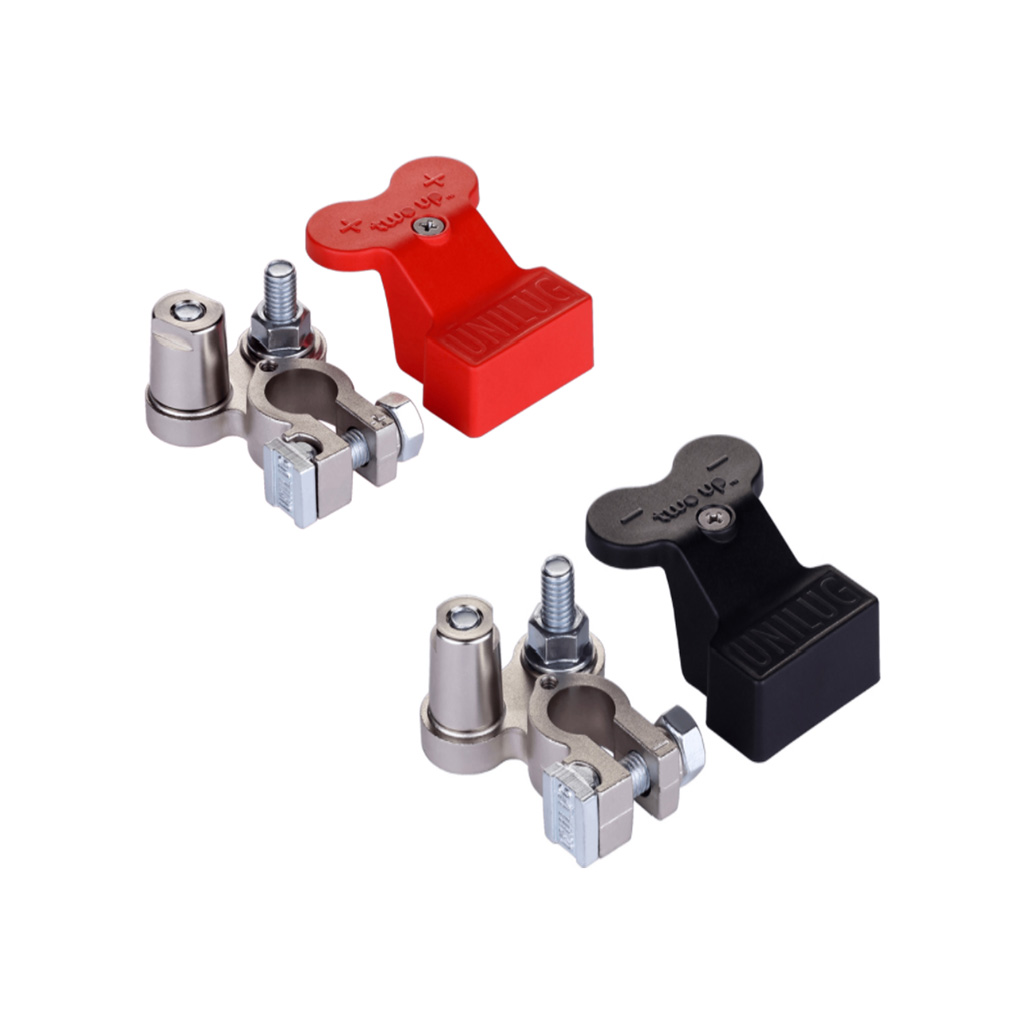

 Fittings

 Cleaning & Misc

 Clearance & Promotion
Latest News
What Causes Battery Terminal Corrosion in Cars?
Aug
A battery can test healthy and still cause frustrating electrical faults when the terminals are corroded. If you are asking what causes battery terminal corrosion, the short answer is a chemical reaction around the battery posts and cable clamps. The more useful answer is that corrosion can also point to a charging issue, a leaking battery, poor terminal fitment or harsh operating conditions.
For a 4WD, caravan, boat, work ute or fleet vehicle, terminal corrosion is more than an untidy white or blue-green deposit. It adds resistance at a high-current connection. That can mean slow cranking, voltage drop to accessories, unreliable DC-DC charging and heat at the battery lead under load.
What causes battery terminal corrosion?
Most corrosion begins when battery gases, acid mist or electrolyte vapour react with the metal at the terminal. Lead-acid batteries release small amounts of hydrogen and other gases during normal charging, particularly when charging hard. Around the terminals, that vapour can react with lead, copper, aluminium and steel components, creating the powdery deposits commonly seen on battery posts and clamps.
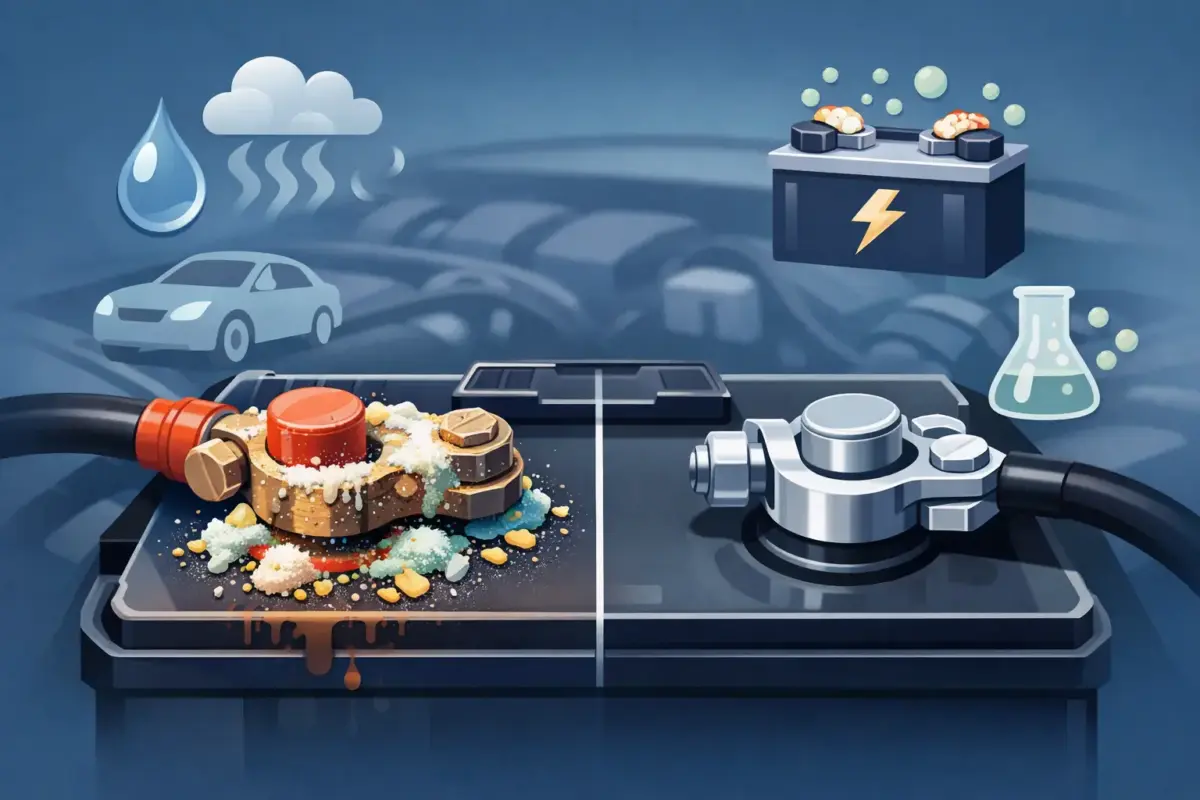
The colour gives a useful clue, although it is not a complete diagnosis. White or grey deposits are often lead sulphate or other lead compounds. Blue or green corrosion commonly indicates copper reacting at the cable lug or clamp. A damp, crusty build-up around the base of a battery post may suggest electrolyte is escaping, rather than simply being deposited by normal battery venting.
A light film over a long service life is not unusual. Heavy, fast-returning corrosion needs attention because it may be a symptom of a fault rather than a cleaning problem.
Overcharging and incorrect charge voltage
Overcharging is one of the most common reasons corrosion keeps coming back. When a conventional flooded battery is charged at excessive voltage, it gases more heavily. More gas and vapour around the terminal means more opportunity for corrosion to form.
In a vehicle, the cause may be an alternator regulator fault. In a caravan or dual-battery system, it could be an incorrectly configured DC-DC charger, solar regulator or mains charger. Battery chemistry matters here. A flooded lead-acid battery, AGM battery, gel battery and lithium battery do not use the same charging profile. Applying the wrong profile can reduce battery life and create faults well beyond terminal corrosion.
Check charge voltage at the battery terminals with a quality multimeter, not only at a dash gauge or charger display. Compare the reading with the battery and charger manufacturer specifications. Voltage targets vary with battery type, temperature and charging stage, so there is no one setting that suits every 12V or 24V system.
Electrolyte leakage or battery damage
A cracked case, damaged terminal seal, loose vent cap or battery that has been tipped can allow electrolyte to reach the terminal area. Vibration is a particular issue in 4WDs, trailers, marine installations and machinery. If the battery is not held down properly, continuous movement can damage the case or terminals and fatigue the cable connections.
Look for wetness, staining, swelling, a distorted case or corrosion concentrated around one battery post. If there is visible electrolyte leakage, do not treat it as a clean-and-go job. Replace the battery and inspect the battery tray, hold-down hardware, cables and nearby metalwork for acid damage. Neutralising surface residue will not repair compromised battery seals.
Poor terminal fitment and loose connections
A loose battery clamp creates resistance. Resistance creates heat, and heat accelerates oxidation and damage at the connection. It can also lead to intermittent starting faults that are easily mistaken for a flat battery.
The clamp should sit fully on the correct post and tighten securely without being forced or distorted. Avoid stacking several cable lugs directly on a battery terminal bolt where possible. It makes the connection harder to secure, complicates fault-finding and can leave a high-current lug with poor contact. Purpose-built battery terminals, distribution posts or fused battery accessories provide a cleaner way to connect multiple loads.
Also check that the terminal type matches the battery. Automotive tapered posts, threaded studs and marine-style terminals are not interchangeable. An adaptor that is poorly matched to the terminal can create a connection that feels tight but has limited contact area.
Moisture, salt and contamination
Corrosion is faster in wet, salty or contaminated environments. Coastal vehicles, boats, campers used near the beach and equipment exposed to wash-down conditions all need more frequent inspection. Salt residue attracts moisture and can support unwanted current leakage across dirty battery surfaces.
Mud, dust, diesel residue and battery hold-down grime also retain moisture around terminals. Under-bonnet heat then dries the contamination into a conductive, corrosive film. This is why a clean battery top matters, especially where auxiliary batteries and power distribution gear are mounted in engine bays.
Age and normal battery venting
An older flooded battery may corrode around its terminals even when the charging system is operating correctly. Internal wear, higher self-discharge and normal venting can increase as the battery approaches the end of its useful life. If corrosion appears repeatedly on an ageing battery, test its condition rather than repeatedly replacing clamps and cable lugs.
AGM batteries are sealed and generally produce less terminal corrosion, but they are not immune. Overcharging, physical damage and poor connections can still cause deposits and electrical problems. Lithium batteries do not contain sulphuric acid electrolyte in the same way as lead-acid batteries, so the familiar acid-related terminal corrosion is less common. However, loose or wet connections can still oxidise and overheat, particularly at high-current inverter, winch and charging connections.
Why terminal corrosion causes electrical faults
A starter motor, winch, compressor or inverter can draw substantial current. Even a small amount of resistance at a battery terminal can cause a meaningful voltage drop when current demand rises. The vehicle may start normally one day, then click or crank slowly the next. A fridge may cut out on low voltage despite a battery that appears charged.
In 24V systems, corrosion at one battery in a series pair can be especially misleading. The system may show a reasonable overall voltage while one individual battery or interconnect has a poor connection. Test each battery and each link under load where practical.
Heat is the warning sign not to ignore. If a terminal or cable lug becomes hot during cranking, winching or charging, stop and investigate. A clean-looking terminal is not necessarily sound if the clamp is loose, the lug is damaged or the cable has corrosion hidden beneath its insulation.
How to clean corroded battery terminals safely
Before cleaning, isolate the battery and switch off chargers, solar inputs and electrical loads. On a typical negative-earth vehicle, remove the negative cable first, then the positive cable. Refit in the reverse order: positive first, negative last. This reduces the risk of accidentally shorting a tool from the positive terminal to vehicle bodywork.
Wear eye protection and gloves. For lead-acid battery residue, use a suitable battery terminal cleaner or a small amount of bicarbonate of soda mixed with water to neutralise acid on external surfaces. Keep the solution out of battery cells and away from vents. Use a terminal brush to clean the posts and the inside of the clamps back to sound metal, then wipe and dry everything thoroughly.
Inspect the cable lugs closely once they are exposed. Green corrosion creeping under insulation, loose crimp barrels, brittle copper strands or a stretched clamp are reasons to replace the cable end or lead. Cleaning the visible surface will not restore a cable that has corroded internally.
Reassemble with the clamps fully seated and tightened to the battery manufacturer recommendation. A light application of terminal protectant after assembly can help limit moisture and vapour exposure. Do not use grease or spray as a substitute for clean metal-to-metal contact. The connection must be mechanically secure first.
Preventing corrosion in 12V and 24V setups
Prevention starts with correct installation. Use properly sized cable, quality lugs, secure battery clamps and a battery hold-down that suits the vehicle or application. Keep terminals accessible enough to inspect, but protected from direct spray, loose tools and accidental short circuits.
For touring and work vehicles, inspect battery terminals before a long trip and after severe corrugations, deep water crossings or coastal use. Check auxiliary batteries, Anderson connectors, solar charge connections and earth leads at the same time. Corrosion at the main battery can be obvious, while a poor earth or battery interconnect can hide until a high-current load exposes it.
If corrosion returns within weeks of a thorough clean, do not keep treating the symptom. Test the battery, confirm the charging voltage and inspect the terminal hardware. Bluebar Industries supplies the practical battery accessories, cable components and workshop tools needed to replace damaged connections with parts suited to real 12V and 24V work.
A clean terminal is useful. A clean terminal that stays dry, tight and correctly charged is what keeps the starter, accessories and charging system dependable when you are well away from the workshop.