

 Cable Automotive / Marine
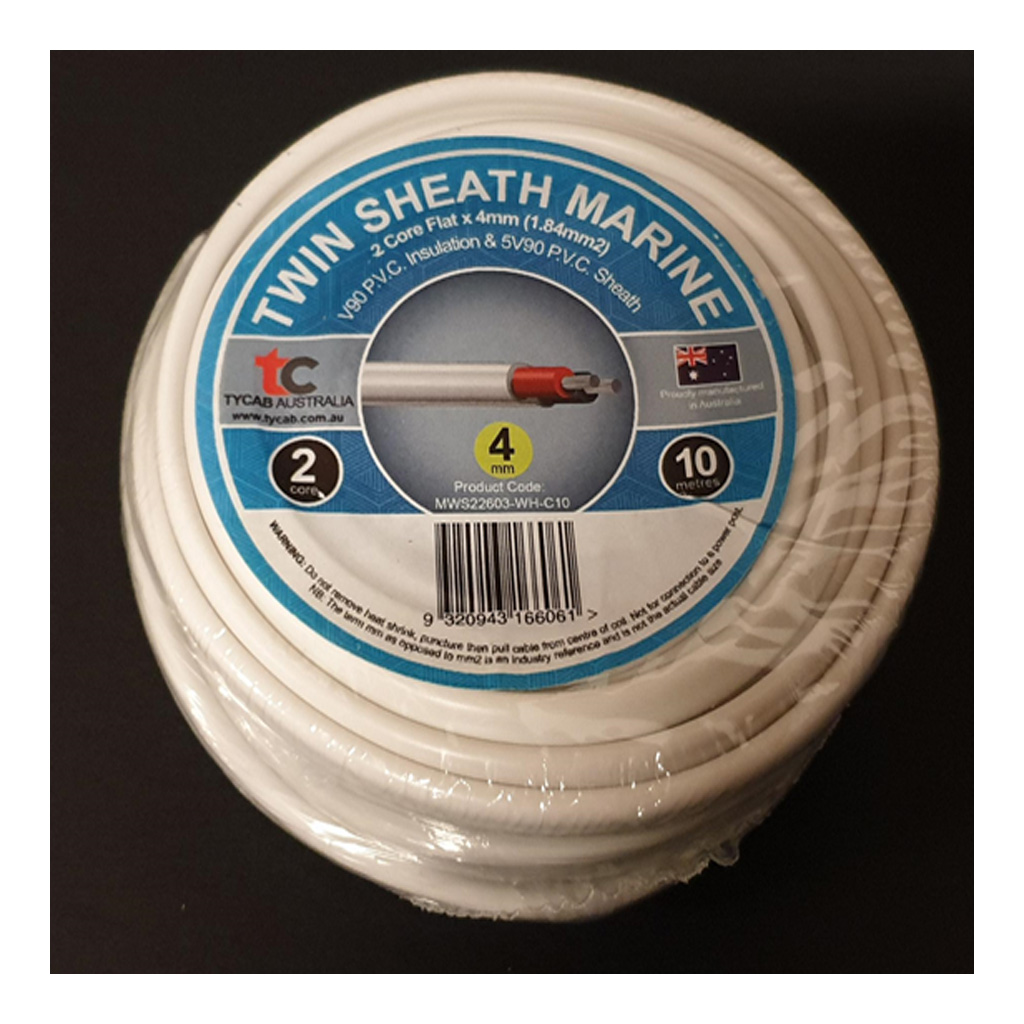
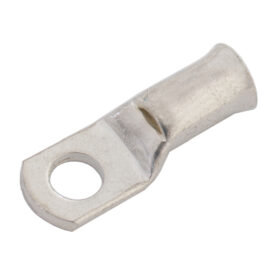 Cable Lugs
 Cable Lug Assortment Kits
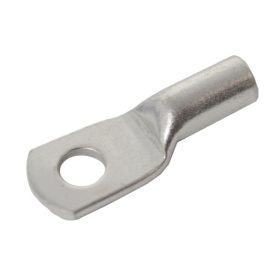 Cable Lugs Straight Wall Closed
 Cable Glands
 Convoluted Split Tubing
 12/24v Products & Access
 Electrical Connectors
 Solar Powered Products
 LED Lights

 Tools

 Auto Parts & Categories

 Fittings
 Cleaning & Misc
 Clearance & Promotion
Latest News
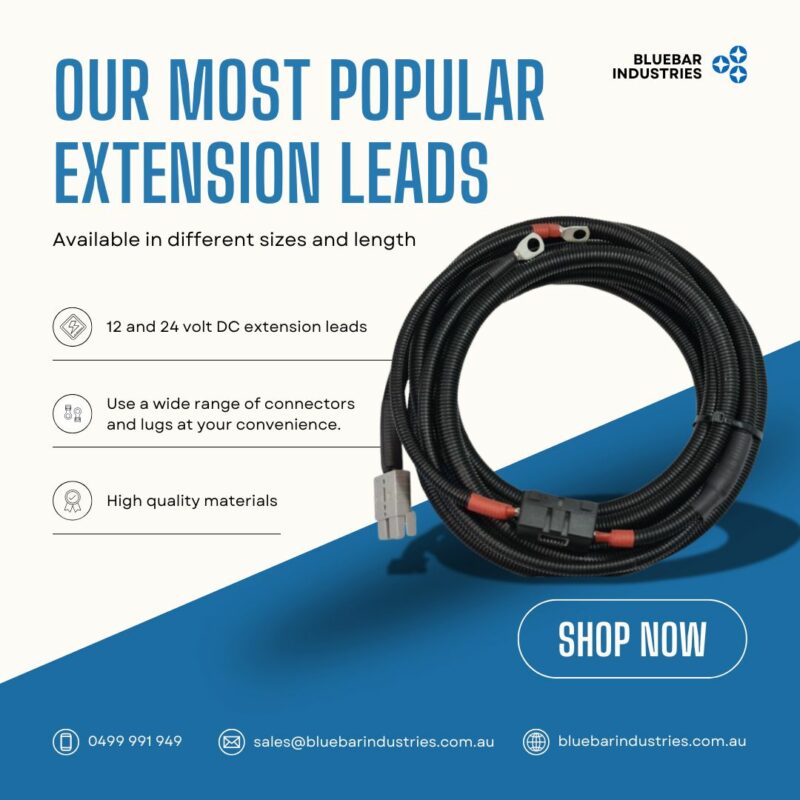
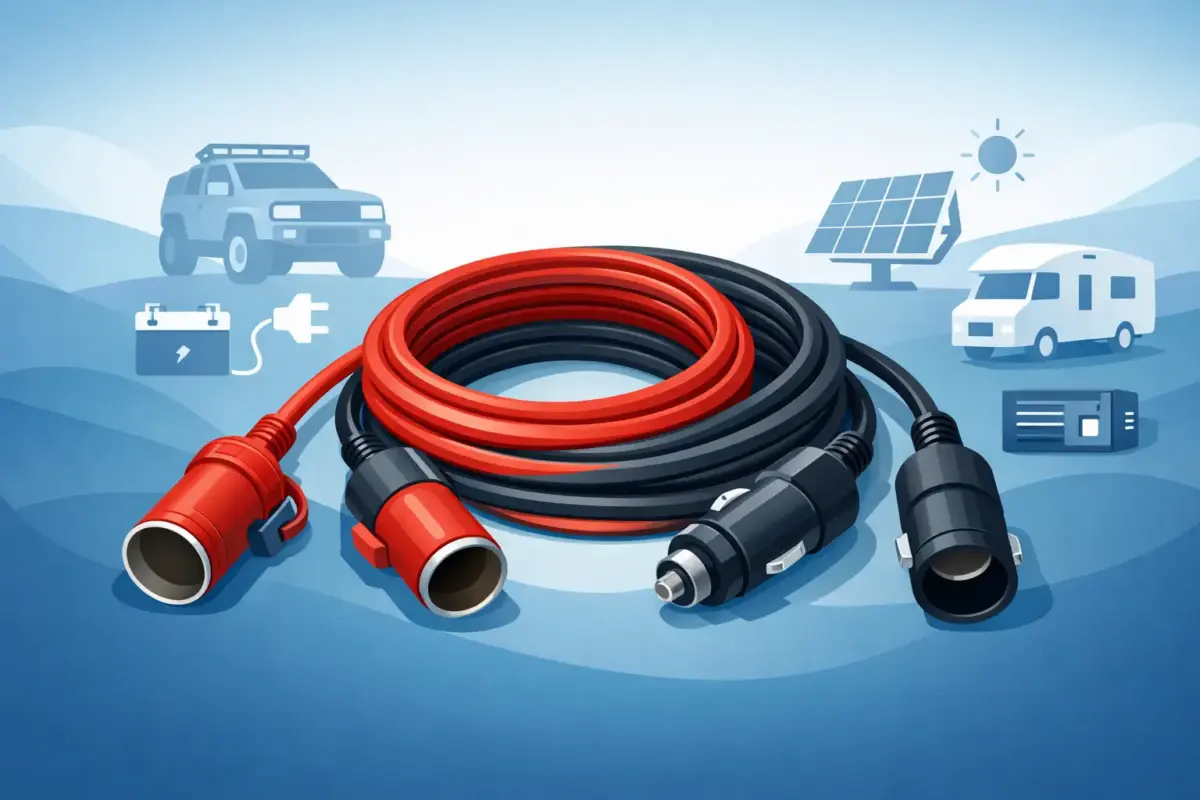
Heavy Duty Extension Leads for 12V and 24V
Jul
A fridge that cuts out on a warm afternoon, a winch that slows under load, or solar that never reaches its expected output can all come back to one overlooked part of the system: the lead between two components. Heavy duty extension leads are not simply longer cables. In a 12V or 24V setup, cable size, length, connector quality and termination method all affect the power delivered at the other end.
For 4WDs, caravans, campers, boats and trade vehicles, the right extension lead needs to handle vibration, weather, regular connection cycles and the current draw of the equipment it serves. Selecting by appearance alone is a quick way to end up with voltage drop, hot connectors or a lead that fails when it is needed most.
What makes an extension lead heavy duty?
A heavy duty DC extension lead is built for the electrical load and operating environment, not just fitted with a thicker-looking sheath. It should use appropriately sized copper cable, reliable connectors, secure crimped terminations and insulation suited to the conditions it will see.
The term can mean different things depending on the job. A short lead running a low-current LED light does not need the same cable as an Anderson extension between a battery box and a portable fridge, or a lead supplying a high-output inverter. The required specification depends on current, cable length and acceptable voltage loss.
It is also worth separating 12V and 24V DC leads from 240V mains extension leads. They are designed, rated and connected differently. A 12V or 24V automotive extension lead is not a substitute for a mains lead, and a domestic 240V lead should never be adapted for vehicle DC work.
Cable size is where performance starts
At low voltage, small losses matter. A voltage drop that might be insignificant on a 240V circuit can make a real difference in a 12V system. As cable length increases, resistance increases too. Under load, that resistance reduces the voltage available to the appliance or charger at the far end.
That is why a lead should be sized for the full circuit distance, not just the visible extension section. If a battery is connected to a fridge through a battery lead, an extension lead and appliance lead, all of that cable contributes to voltage drop. Both the positive and negative paths count in a two-wire circuit.
For low-current jobs, a compact twin-core cable may be suitable. For higher-current accessories, battery charging, portable solar or Anderson-connected gear, heavier cable is generally needed. The correct choice is based on amp draw, total cable run and duty cycle. A lead that only carries a load briefly may tolerate more voltage drop than one running a fridge, compressor or DC-DC charger for hours.
Copper quality matters as well. Quality automotive cable is flexible, handles vibration better and is easier to route through vehicles and canopies. Very cheap cable can have undersized conductors hidden beneath thick insulation, so outside diameter alone is not a reliable guide.
Match heavy duty extension leads to the application
The connector at each end should suit the load, the location and how often the lead will be connected. A well-sized cable with an underspecified connector is still a weak point.
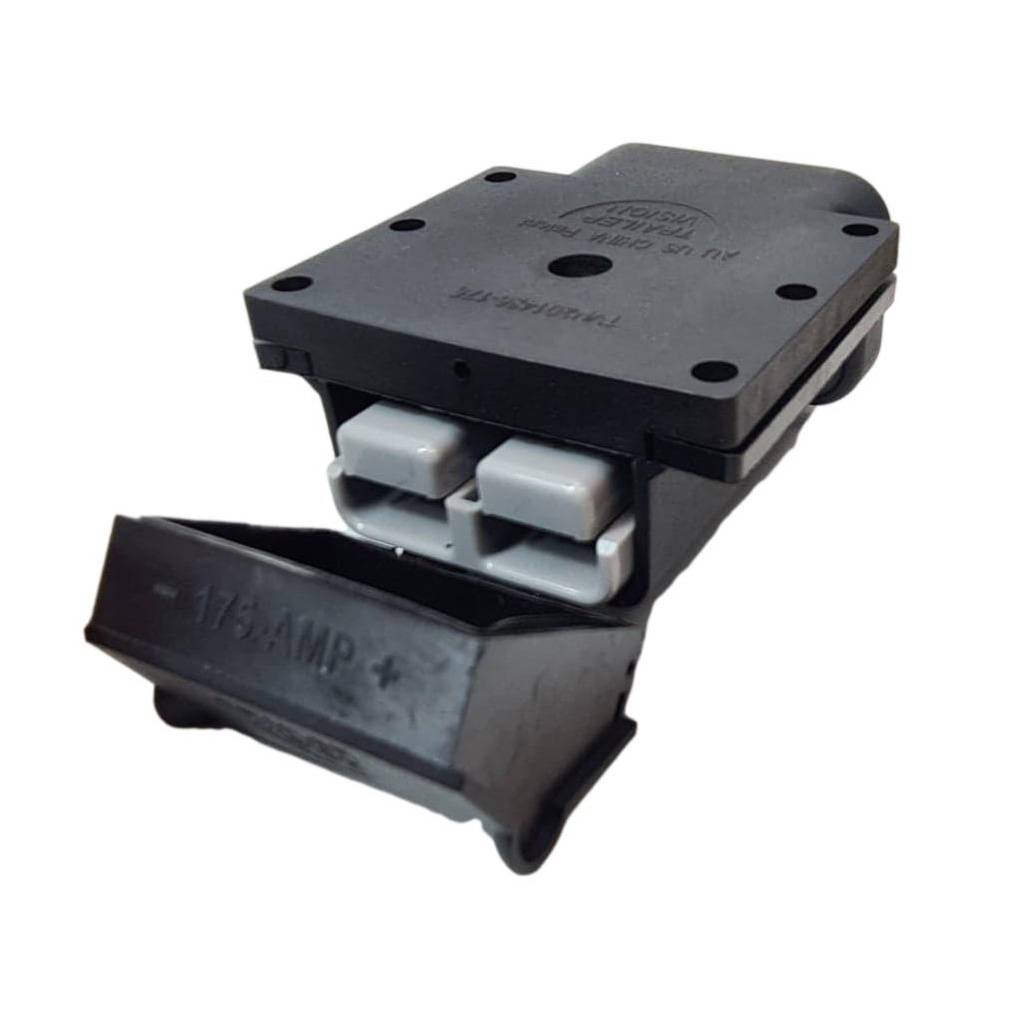
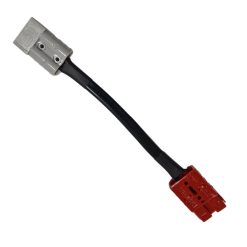
Anderson-style connectors are a common choice for higher-current 12V and 24V connections because they provide a firm, polarised connection and are widely used across 4WD, caravan, fleet and workshop applications. They are practical for battery boxes, portable fridges, solar blankets, trailer power and removable accessories. Connector housings and contacts still need to be matched to cable size and current rating, and the contacts must be properly crimped.
Cigarette-style plugs can be convenient for low-current accessories, but they are often not the best option for sustained higher loads. Their fit can vary between sockets, vibration can loosen the connection, and poor contact creates heat. A dedicated high-current connector is usually the more dependable option where the lead will regularly carry serious load.
For solar extension leads, polarity and connector compatibility deserve extra attention. A solar lead must match the panel, regulator or portable blanket connection arrangement. Extending the wrong side of a regulator, using insufficient cable size, or mixing connectors without checking polarity can reduce charging performance or create a fault.
Length is a trade-off, not a bonus
More length gives you more flexibility at camp, on a job site or around a boat ramp. It also increases resistance, adds bulk and creates more cable to protect from damage. The longest available lead is rarely the best lead.
Choose a length that reaches the intended location with enough allowance for safe routing, then size the cable to suit that length and load. For example, a short battery-to-battery connection may use a different cable size to a longer run from a canopy battery to a portable fridge at the rear of a camper. If the setup is temporary, avoid running the lead across sharp edges, hot exhaust components, moving drawer systems or areas where it can be crushed under a tyre.
Build for Australian conditions
Heat, dust, water, salt spray and corrugations expose weaknesses quickly. Heavy duty extension leads used in touring, marine or industrial environments should have abrasion-resistant insulation and terminations that are protected from pulling and flexing.
Strain relief matters. A connector should not be carrying the mechanical load every time the cable is pulled from a battery box or unplugged at camp. The cable needs a secure entry point, while the connection itself should be supported and kept clear of constant bending.
Where moisture or dust is likely, use covers, boots or enclosed connection points where appropriate. Keep connectors off the ground where possible. On marine setups, salt contamination can cause corrosion at terminals and contacts, so regular inspection and cleaning are part of normal maintenance.
A fuse protects the cable and should be fitted close to the power source on the positive side where the circuit requires it. The fuse rating must protect the cable while allowing normal appliance operation. Fitting an oversized fuse to stop nuisance blowing does not solve the underlying issue. It can leave the cable exposed if a short circuit occurs.
Common selection mistakes
Most lead problems are preventable before installation. Four mistakes turn up regularly in vehicle and mobile-power systems:
- choosing cable by insulation thickness rather than conductor size and intended current;
- extending a high-current circuit with a lead sized only for low-current accessories;
- using loose, poorly crimped or mismatched connector contacts; and
- running an unfused lead where a damaged cable could short directly to a battery.
Another common issue is assuming a connector’s headline current rating applies in every situation. Actual performance changes with cable size, contact quality, ambient temperature, connection condition and how long the circuit runs under load. If a plug, socket or connector feels warm during normal use, treat it as a warning sign and inspect the entire circuit.
When a custom lead makes more sense
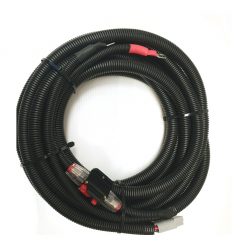
Off-the-shelf heavy duty extension leads suit many common tasks, especially where connector type and length are standard. A custom-built lead is often the better answer when working around a specific canopy layout, dual-battery system, trailer connection, solar installation or workshop requirement.
Custom lengths reduce excess cable and help keep installations tidy. They also allow the cable size, connector combination and protection to be matched to the actual load instead of forcing a system to fit a generic lead. This is particularly useful where one end needs an Anderson connector and the other needs a battery terminal, solar connector, DC socket or another specialised fitting.
For trade vehicles and fleet equipment, standardising lead specifications can make future maintenance easier. When every vehicle uses the same connector orientation, fuse approach and cable sizing, faults are quicker to diagnose and replacement parts are easier to source. Bluebar Industries supplies components and custom lead solutions suited to these practical 12V and 24V requirements.
Check the lead before relying on it
Before putting a new or existing lead into regular service, inspect the insulation for cuts, flattening and heat damage. Check that terminals are fully seated, connector housings are not cracked, and crimps do not move when given a firm pull. Confirm polarity with a multimeter before connecting sensitive equipment, particularly after fitting new connectors or adaptors.
Then test the lead under its expected load. Measure voltage at the source and at the appliance while it is running. That gives a far better picture than an unloaded test, especially for fridges, compressors, pumps and charging equipment. If voltage drop is excessive, the answer may be a heavier cable, a shorter run, cleaner terminals or a better connector arrangement.
The best heavy duty extension lead is the one that disappears into the job: correctly sized, properly protected and dependable every time you connect it.