

 Cable Automotive / Marine
 Cable Lugs
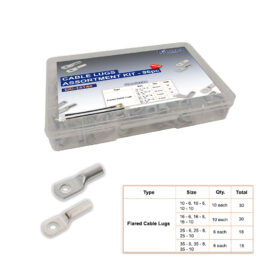 Cable Lug Assortment Kits
 Cable Lugs Straight Wall Closed
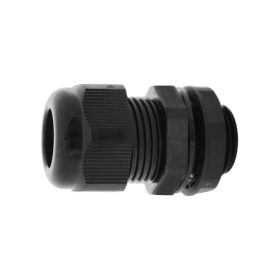 Cable Glands
 Convoluted Split Tubing
 12/24v Products & Access
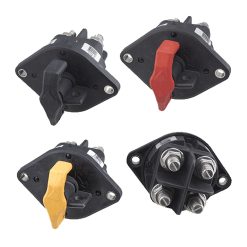

 Electrical Connectors
 Solar Powered Products
 LED Lights
 Tools
Tools





 Auto Parts & Categories

 Fittings



 Cleaning & Misc


 Clearance & Promotion
Latest News
Battery Terminal Connectors for Caravans
May
A caravan battery setup usually gets judged when something stops working at the worst possible time – the fridge drops out, the lights dim, or the brake controller starts playing up halfway through a trip. In plenty of cases, the battery itself is not the real problem. The weak point is often the connection, which is why choosing the right battery terminal connectors for caravans matters more than many owners expect.
A terminal connector has a simple job: transfer current cleanly and hold firm under vibration, heat, dust and moisture. In a caravan, that job is tougher than it sounds. You are dealing with constant road shock, outdoor exposure, varying accessory loads and, in many rigs, charging inputs from solar, DC-DC chargers, tow vehicles and mains systems. If the terminal connection is poor, the rest of the system is already behind.
Why battery terminal connectors for caravans matter
Caravans are not static installations. Every trip adds movement, corrugations, temperature changes and the occasional rushed repair. A battery terminal that might survive in a light-duty shed setup can become unreliable once it is fitted into a van that sees regular touring.
The connector affects both performance and serviceability. A quality terminal gives you secure clamping force, proper contact area and enough room to connect more than one cable where needed. It also makes future maintenance easier. When you need to isolate a battery, add an accessory, replace a fuse lead or trace a fault, a well-laid-out terminal arrangement saves time and avoids damage.
There is also a safety angle. Loose or undersized battery connections create resistance. Resistance creates heat. Heat around high-current 12V or 24V systems is not something to ignore, especially in enclosed battery boxes or compartments with multiple cables already under load.
What to look for in caravan battery terminals
The right terminal depends on the battery type, the cable size and the number of circuits landing at the battery. That sounds obvious, but it is where plenty of installations go wrong. People often choose whatever physically fits the post, then try to force the rest of the wiring to work around it.
Start with the battery itself. Some caravan batteries use standard automotive posts, while others use threaded studs or dual terminal styles. AGM, lithium and deep-cycle batteries can vary a lot in terminal design. If the connector does not match the battery correctly, no amount of tightening will make it a good installation.
Next is cable capacity. The connector has to suit the actual cable size, not the cable size you hope is close enough. A terminal built for smaller cable can leave strands compressed badly or unevenly seated. One made for oversized cable may not crimp or clamp securely. In both cases, current flow suffers and reliability drops away.
Material matters too. For caravans, you want conductive materials that resist corrosion and hold up in exposed conditions. Brass and lead battery terminals are still common, and each has its place. Brass tends to offer good corrosion resistance and mechanical strength. Traditional lead terminals are widely used and familiar, but they can deform more easily if over-tightened. If the van sees coastal air, regular washdowns or rough touring, corrosion resistance becomes a bigger part of the decision.
Common terminal types and where they fit
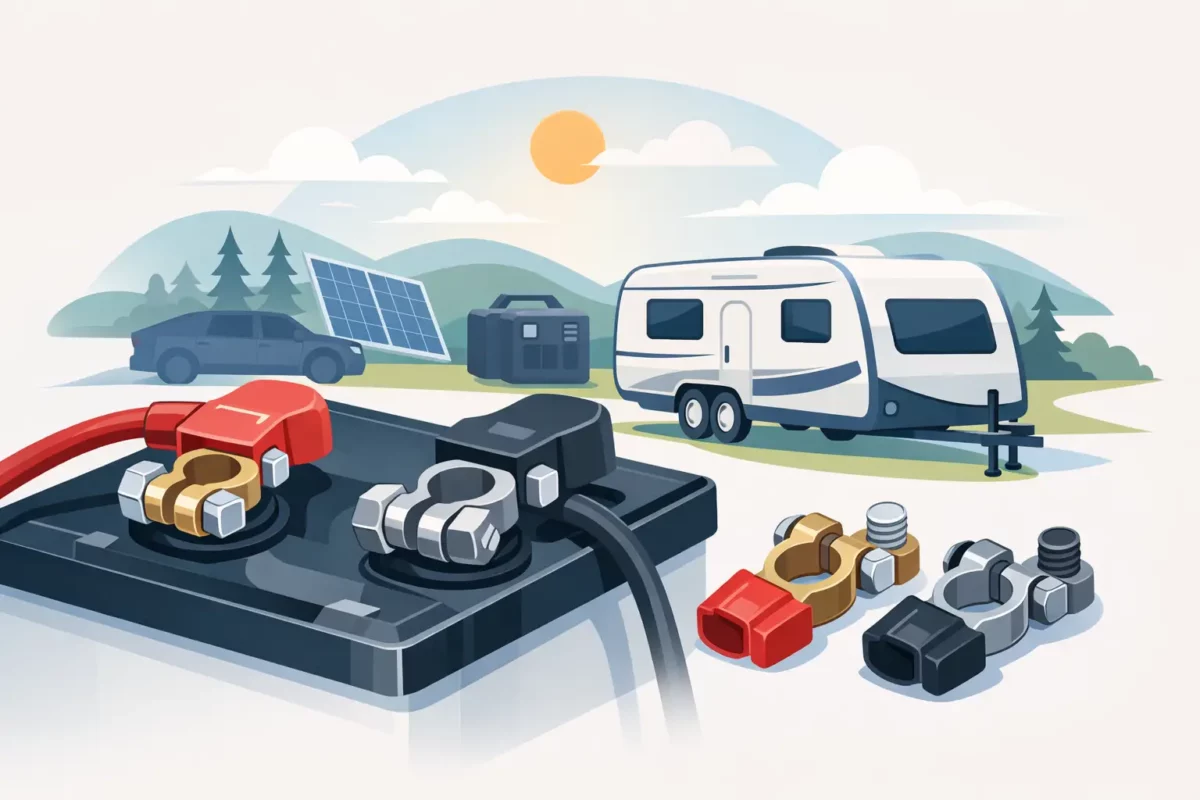
Automotive clamp-style terminals are still widely used on caravan house batteries where the battery has standard round posts. They are simple, proven and easy to service. The better versions offer extra connection points for accessory cables or charging circuits, which is useful when the battery is doing more than one job.
Stud-style terminals suit setups where you want a more controlled connection using lugs, nuts and washers. These are common on deep-cycle and lithium batteries, and they generally give a cleaner result for permanent installations. They also make more sense when you have multiple fused feeds, charger inputs and negative returns that need ring terminals.
Marine-style battery terminals can be a smart option for caravans too, especially where durability and accessory connection points matter. They often combine a clamp connection with threaded posts, which gives more flexibility without stacking too much hardware directly onto the battery.
Quick-release battery terminals sound convenient, and in some cases they are. If a caravan is stored for long periods or the battery needs to be isolated regularly, they can be useful. The trade-off is that not every quick-release option is suited to vibration-heavy applications or higher accessory loads. Convenience should not come ahead of secure contact.
Matching connectors to the load
Not all battery connections in a caravan carry the same current. A small LED lighting circuit and a high-draw inverter are living in very different worlds. Your main battery terminal connector needs to handle the total current that may pass through that point, not just the load of one accessory.
This is where people run into trouble by stacking multiple ring terminals onto a basic clamp or adding accessories one at a time until the battery post turns into a crowded mess. It may work for a while, but the contact quality usually gets worse as more hardware is added. If your system includes a fridge, charger, solar regulator, brake system, water pump and inverter, the better approach is often to run the battery into a busbar or fused distribution point, then keep the battery terminal itself clean and mechanically sound.
For higher-current systems, cable lug quality is just as important as the terminal connector. A good battery terminal paired with a poor crimp is still a poor connection. If the lug is loose, under-crimped or badly sized, the fault remains in the system regardless of how good the terminal looks from the outside.
Installation details that make a difference
A battery terminal should be tight, but not crushed. Over-tightening can distort the connector, damage battery posts or strip hardware, especially on softer materials. Under-tightening allows movement, which leads to arcing, heat and intermittent faults. Use the battery and terminal manufacturer guidance where available rather than relying on guesswork.
Clean contact surfaces before assembly. Dirt, oxidation and old residue all reduce conductivity. If you are replacing a terminal, inspect the cable carefully before reusing it. Blackened copper, broken strands or stiff insulation near the end of the cable usually point to heat or corrosion that has already travelled back into the conductor.
Protection matters after installation. Terminal covers, boots and insulation sleeves help prevent accidental shorting and reduce exposure to grime and moisture. In a caravan battery box where tools, spare parts or loose hardware may end up nearby, exposed positive terminals are asking for trouble.
Vibration support is another detail that gets missed. Heavy cable should not be hanging off a battery terminal unsupported. Secure the cable run so the terminal is carrying electrical load, not acting as a mechanical anchor point every time the van hits a rough section of road.
When a standard terminal is not enough
Some caravan setups outgrow basic battery connectors quickly. Dual battery systems, DC-DC charging, lithium upgrades, solar expansion and inverter additions all increase the demand on the battery end of the system. At that point, the right answer may be more than just swapping one terminal for another.
If you are constantly adding leads onto the battery, it may be time to rethink the layout. Busbars, fuse blocks, isolators and purpose-built leads can tidy up the system, improve fault-finding and reduce strain on the battery terminals. For trade installers and serious DIY owners, this usually gives a better long-term result than trying to make one connector do everything.
This is also where component quality separates itself. Cheap terminals can look acceptable on the shelf but fall short in clamping strength, thread quality or corrosion resistance. In caravan applications, where access can be awkward and failures happen away from home, replacing poor-quality connectors twice is rarely cheaper than fitting the right parts once.
Choosing for Australian conditions
Australian touring conditions are hard on electrical gear. Heat under front boots, dust on inland tracks, moisture around coastal parks and constant vibration on regional roads all test battery hardware. Battery terminal connectors for caravans need to cope with that reality, not just fit neatly in a workshop.
For most caravan owners and installers, the best choice is the one that matches the battery correctly, suits the cable size properly, carries the required current without compromise and stays serviceable over time. Sometimes that is a straightforward clamp terminal. Sometimes it is a stud connection with lugs, covers and a proper distribution setup. It depends on how the van is wired and how hard it is used.
Bluebar Industries works in that practical space every day – supplying the connectors, cable, accessories and electrical hardware that have to perform in real 12V and 24V installs, not just look right in a product photo.
If your caravan power system is due for an upgrade or repair, treat the battery connection as a critical component, not an afterthought. A solid terminal is a small part of the build, but it has a big say in whether the whole setup keeps working when the trip gets rough.