

 Cable Automotive / Marine
 Cable Lugs
 Cable Lug Assortment Kits
 Cable Lugs Straight Wall Closed
 Cable Glands
 Convoluted Split Tubing
 12/24v Products & Access

 Electrical Connectors
 Solar Powered Products
 LED Lights
 Tools


 Auto Parts & Categories

 Fittings
 Cleaning & Misc
 Clearance & Promotion
Latest News
Deutsch Connectors vs Superseal: Which Fits?
Oct
A connector failure rarely happens in the workshop. It shows up on a corrugated track, at a boat ramp, or halfway through a job when a light bar, pump or sensor stops working. The Deutsch connectors vs Superseal decision matters because both are sealed automotive connector systems, but they suit different wiring layouts, component types and service expectations.
For most 12V and 24V accessory wiring, either can be a good choice when it is genuine, correctly crimped and matched to the cable. The better connector is the one that fits the circuit, the available space and the likelihood that the connection will be unplugged for servicing.
Deutsch connectors vs Superseal: the practical difference
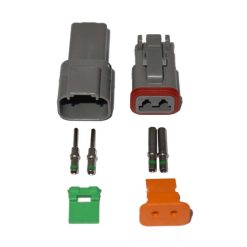
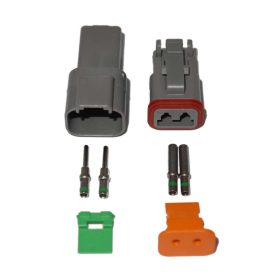
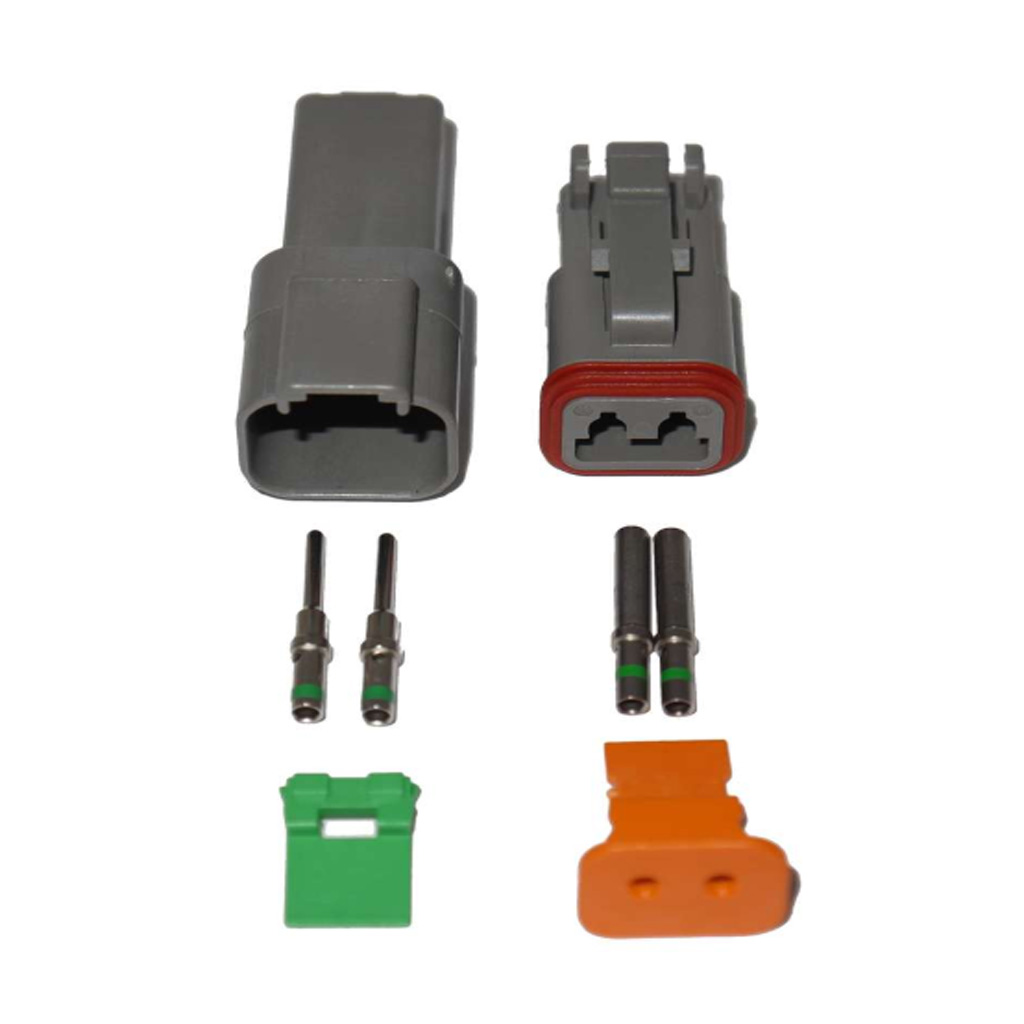
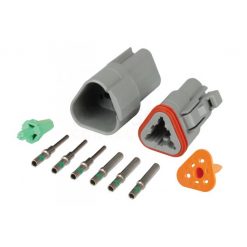
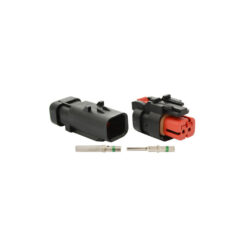
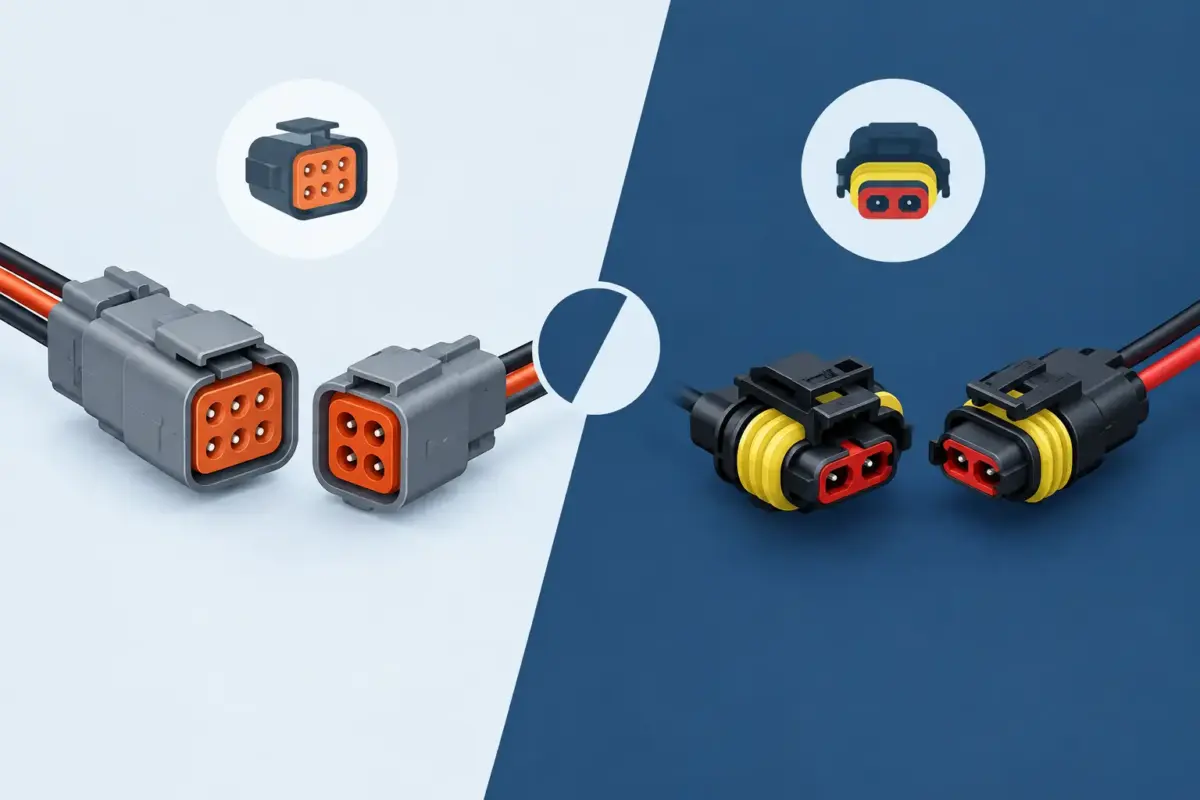
Deutsch is a connector brand and family of connector series, not one single plug. In automotive accessory work, people usually mean the Deutsch DT series: a tough, rectangular sealed connector with a positive latch, removable terminals and a wedge lock that holds terminals in place. Other Deutsch families, such as DTM and DTP, cover smaller signal wiring and heavier-current applications.
Superseal usually refers to the TE Connectivity Superseal 1.5 series. These are compact sealed plugs and sockets commonly used for low-voltage automotive wiring. They use individual wire seals and a secondary terminal lock, and are widely available in two-, three-, four-, five- and six-way configurations.
Neither connector mates with the other. A Deutsch DT plug needs its matching DT receptacle, terminals, wedgelocks and seals. A Superseal connector needs its matching housing, terminals, seals and secondary lock. Trying to mix components between systems is a quick way to create a loose, unreliable connection.
Where Deutsch connectors make sense
Deutsch DT connectors are a strong choice for exposed vehicle wiring where vibration, dust, water and repeated servicing are expected. They are common on trucks, machinery, off-road vehicles and accessories that may need to be removed or replaced over time.
The connector body is larger than a comparable Superseal, but that size brings useful benefits. The latch is easy to operate with gloves or dirty hands, terminals can generally be released with the correct removal tool, and the wedge lock gives a clear check that terminal retention is complete. For a 4WD harness running to spotlights, a compressor, rear work lights or an auxiliary fuel tank sender, that serviceability can be worth the extra room.
Deutsch DT is generally used with cable sizes appropriate for medium-current accessory circuits. Actual current capacity is determined by the terminal type, wire gauge, circuit length, ambient temperature and connector configuration. Do not select a multi-pin connector simply by adding up a headline amp figure. Heat builds where several loaded circuits sit beside each other, especially in an engine bay or enclosed canopy.
For very small wires, a Deutsch DTM may be more suitable. For heavier conductors, a DTP or another high-current connector family may be the better fit. This is one reason it helps to specify the actual cable size and load before ordering housings and terminals.
Deutsch strengths
A Deutsch connector is often the practical pick when the plug will be regularly disconnected, the vehicle works in harsh conditions, or a repair needs to be made quickly in the field. Its positive engagement and widely recognised format also suit trade builds where another auto electrician may need to diagnose the vehicle later.
The trade-off is bulk. A DT connector can be awkward behind a compact dash panel, inside a small LED housing or where a loom has to pass through a tight grommet. It also requires the correct terminals and a proper crimping method. A pair of pliers and a hopeful squeeze will not produce a dependable electrical joint.
Where Superseal connectors make sense
Superseal 1.5 connectors are popular for compact, sealed low-voltage connections. They work well for sensors, LED lighting, low-current pumps, switches, small fans and accessory looms where space is limited and a neat plug connection is needed.
Their smaller body can make a real difference on a modern ute, caravan or marine installation. When several connections need to sit behind a grille, under a seat base or inside a canopy wall, Superseal plugs are easier to package than larger connector systems. They are also commonly used on aftermarket lighting and automotive equipment, so matching an existing connector may be the simplest and cleanest option.
Like Deutsch, Superseal performance depends heavily on assembly. Each wire seal needs to match the cable’s outside diameter. The terminal must be crimped correctly to both conductor and seal, then fully inserted until it locks. Fit the secondary lock only after checking every terminal is seated. If the lock will not fit, do not force it – a terminal is usually not home or the wrong terminal has been used.
Superseal strengths and limits
For low-current, compact accessory wiring, Superseal offers a tidy and proven sealed connection. It is particularly useful where a plug only needs a few pins and will not be unplugged every week.
Its smaller terminals and compact latch can be less forgiving during field repairs. They demand good stripping length, the correct crimp die and careful terminal insertion. In a mudguard liner or underbody location where the connector may be pulled apart with wet gloves, a larger Deutsch latch is often easier to live with.
Sealing is not the same as waterproofing the whole installation
Both connector styles are designed to resist water and contamination when assembled correctly, but neither makes poor loom routing acceptable. Water can wick through damaged cable, sit inside a low point in the loom, or enter from the rear if seals are incorrect. A sealed connector installed with cable facing up under a wheel arch can still have a hard life.
Route the loom away from exhaust heat, sharp edges and moving suspension parts. Support it with suitable clips or cable ties, use split conduit or braided protection where abrasion is likely, and leave enough service loop that the connector is not supporting the harness weight. On caravans and trailers, protect joins from stone impact and avoid placing them where road spray constantly sits.
For unused cavities, fit the correct cavity plugs. An empty terminal position is an open path for dust and moisture unless it has been sealed as designed. This detail is often missed when a six-way housing is used for a three-wire accessory.
Choose by circuit, cable and access
Start with the circuit rather than the connector’s appearance. A work light with power and earth may only need a two-way connector. A reversing camera, sensor assembly or multi-function lamp may need several circuits. List every conductor, including earths, trigger wires and signal wires, then allow for future wiring only if there is a genuine reason.
Next, confirm the cable size. The terminal must suit the conductor cross-section and the seal must suit the cable insulation diameter. Automotive cable can vary considerably in outside diameter even where the conductor size is similar. A seal that is too loose can compromise environmental protection; one that is too tight can distort the wire or prevent proper assembly.
Finally, consider access. Use Deutsch where a connection is exposed, likely to be serviced, or needs a large, positive latch. Use Superseal where a compact sealed plug suits the cable and load, particularly for lighting and low-current accessory circuits. If the connection carries major battery, inverter or winch current, look to a connector specifically designed for that duty rather than forcing it through either system.
Crimp quality decides reliability
The most expensive connector on the shelf cannot compensate for a poor crimp. Strip only the required length, keep all conductor strands inside the terminal barrel, and use a crimp tool designed for that terminal style and wire range. After crimping, carry out a firm pull test before inserting the terminal into the housing.
Avoid soldering crimp terminals unless the connector manufacturer specifically calls for it. Solder can wick up the conductor, creating a stiff section that may fatigue with vibration. For vehicle and marine looms, a correctly executed mechanical crimp with proper strain relief is normally the better approach.
For custom harnesses, replacement plugs or a complete 12V and 24V install, Bluebar Industries can help match connector families, terminals, cable and protection to the job. The right choice is usually not the connector with the biggest reputation. It is the one correctly rated, properly crimped and positioned where you can service it before a small fault becomes a trip-ending repair.