

 Cable Automotive / Marine
 Cable Lugs
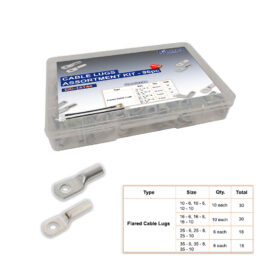 Cable Lug Assortment Kits
 Cable Lugs Straight Wall Closed
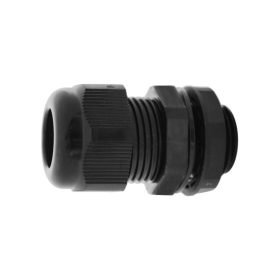 Cable Glands
 Convoluted Split Tubing
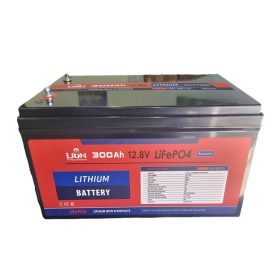 12/24v Products & Access

 Electrical Connectors
 Solar Powered Products
 LED Lights


 Tools





 Auto Parts & Categories

 Fittings



 Cleaning & Misc

 Clearance & Promotion
Latest News
Battery Isolator Versus VSR: Which Suits You?
Oct
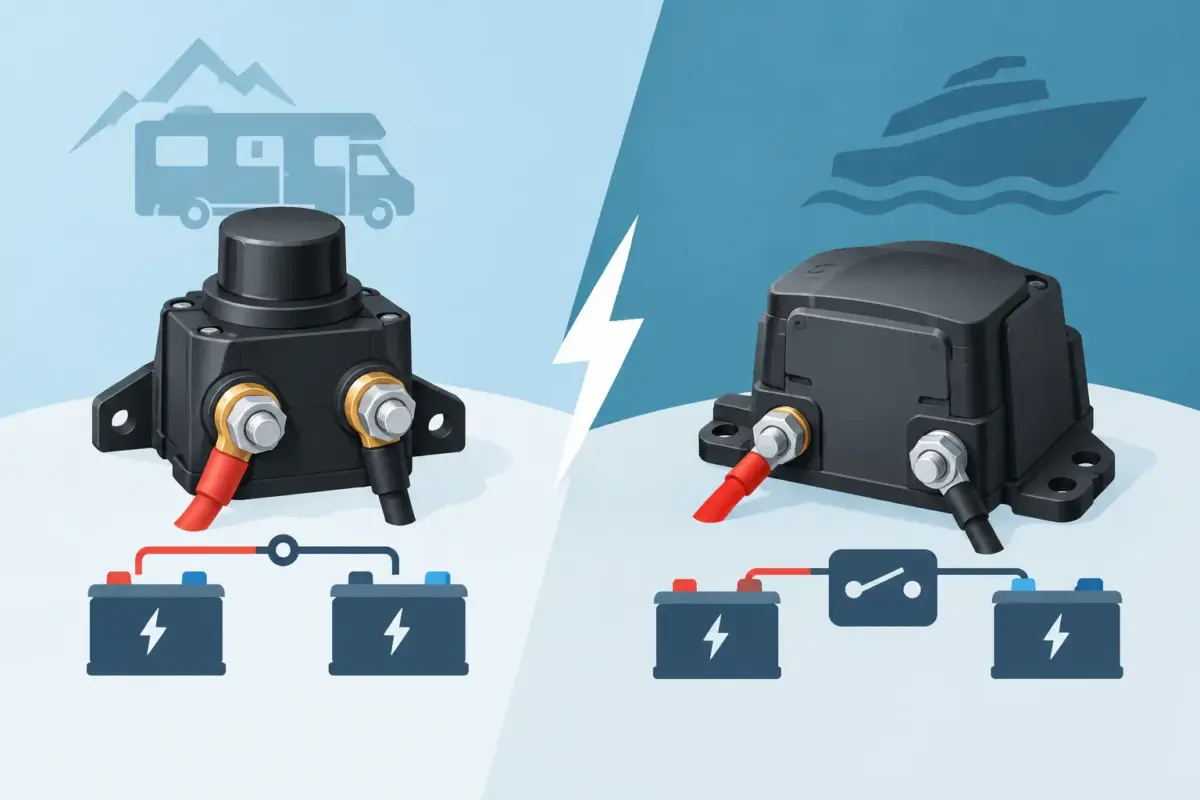
A dual-battery system can look straightforward on paper: start the vehicle, charge the auxiliary battery, stop the vehicle, and keep the fridge running without flattening the starter. The practical question is whether a battery isolator versus VSR setup gives you the charging performance your vehicle, battery type and accessory load actually need.
For many older 4WDs, utes and work vehicles, either option can do the job well. But they do not work in the same way, and the wrong choice can mean slow charging, avoidable voltage drop or an auxiliary battery that never reaches a useful state of charge.
What a battery isolator does
A battery isolator separates the starter and auxiliary batteries so accessories cannot discharge the battery needed to crank the engine. The term can describe several different products, including manual switches, solenoid isolators, diode isolators and electronic battery isolators.
In practical automotive use, a traditional isolator is commonly a solenoid or heavy-duty relay controlled by the ignition circuit. With the vehicle running and ignition on, the relay closes and connects both batteries for charging. Once the ignition is off, the relay opens and isolates the auxiliary battery.
A diode battery isolator works differently. It allows alternator current to feed more than one battery while preventing current from flowing back from one battery to the other. There are no moving contacts, which is useful in some commercial and marine applications. The trade-off is voltage drop. Standard diode isolators can lose enough voltage across the diodes to reduce charge voltage at the battery, particularly where cable runs are already long.
That matters with modern battery chemistry. An AGM battery needs sufficient charge voltage to recover properly, while lithium batteries need charging controlled to their battery management system and manufacturer specifications. A system that appears to be charging can still leave an auxiliary battery undercharged.
What is a VSR?
A voltage-sensitive relay, usually called a VSR, is an automatic relay that connects the batteries only after it detects a suitable voltage. When the alternator raises the starter battery voltage above the relay’s cut-in setting, the VSR closes and allows charge current to flow to the auxiliary battery. When voltage falls below its cut-out setting after the engine stops, it opens again.
This makes a VSR a type of battery isolator, rather than a completely separate category. The real comparison is generally between a voltage-sensing relay and a conventional ignition-controlled solenoid or diode-style isolator.
A VSR does not normally need an ignition trigger wire. That can simplify an installation, especially in a basic 12V system with a conventional alternator and a lead-acid auxiliary battery. Many units also offer dual sensing, which means they can connect batteries when either battery receives charge. This can be useful where a solar charger is connected to the auxiliary battery and you want surplus solar charge to maintain the starter battery.
Battery isolator versus VSR: the practical differences
The main difference is how each unit decides when to connect the two batteries. An ignition-controlled solenoid follows an external signal. A VSR makes the decision by monitoring voltage.
An ignition-controlled solenoid is predictable. Turn the key on, the relay closes. This suits systems where an installer wants exact control, or where the vehicle has an alternator setup that may not produce stable voltage behaviour for a VSR. It also gives a clear path for incorporating switches, battery monitoring or other control equipment.
A VSR is simpler in a conventional setup because it connects only when it sees charging voltage. It avoids linking the batteries as soon as the ignition is switched on, before the alternator has lifted system voltage. For a touring vehicle with a wet-cell, calcium or AGM auxiliary battery located close to the engine bay, this can be an effective and economical arrangement.
Neither option is automatically better. The answer depends on alternator type, cable length, battery chemistry, accessory demand and how deeply the auxiliary battery is regularly discharged.
Voltage drop and cable size still matter
A relay cannot compensate for undersized cable. If the auxiliary battery is in a caravan, canopy, rear drawer system or boat compartment, the cable run may be long enough for voltage drop to become the limiting factor.
At alternator charging current, a long run of light cable can leave the battery receiving significantly less voltage than the alternator is producing. The result is reduced charge acceptance and longer recovery times. This is particularly noticeable with AGM and lithium systems, where correct voltage at the battery terminals matters.
Use cable sized for the run length and expected current, not just what happens to fit through a grommet. Protect positive cables with correctly rated fuses or circuit breakers close to each battery. Secure wiring away from exhaust heat, sharp edges, suspension movement and areas where it can rub through. Good connectors, quality lugs and sound crimping are just as important as the relay choice.
Smart alternators change the decision
Many late-model vehicles use smart alternators that reduce output voltage once the starter battery is charged. A VSR may connect initially, then see voltage fall and disconnect before the auxiliary battery receives a meaningful charge. In other cases, it may remain connected but supply voltage may be too low for proper charging.
This is where a DC-DC charger is usually the more suitable solution. It takes available input power and delivers a controlled charging profile suited to the auxiliary battery. Models designed for smart alternators can continue charging even when alternator voltage varies, and many can also accept solar input.
A VSR is therefore best viewed as a simple battery-combining device, not a charger. It passes alternator voltage through. A DC-DC charger actively manages the charging process.
When a VSR is a good choice
A VSR can be the right fit where the vehicle has a conventional fixed-voltage alternator, the auxiliary battery is lead-acid or AGM, and cable runs are reasonably short. It is common in older 4WDs, basic service vehicles and simple dual-battery installations where the battery is under the bonnet or nearby in the tray.
It can also suit users who want a straightforward system to run a fridge, camp lights and small 12V loads over a weekend, then recharge while driving. The installation is generally less complex and less expensive than a DC-DC charging system, provided all components are correctly rated.
Choose a relay with a continuous current rating that suits the intended alternator and battery connection. Do not select a unit only by its headline peak rating. Consider the cable size, fuse ratings, ambient heat and likely operating time as a complete system.
When a conventional isolator is the better option
An ignition-controlled solenoid may be preferable for a work vehicle, fleet installation or older vehicle where simple, externally controlled battery linking is wanted. It is also useful where a technician needs the relay to operate from a defined vehicle signal rather than a voltage threshold.
Diode isolators can still have a place in certain multi-battery and marine applications, especially where electrical separation is the priority. However, the voltage-drop issue needs to be accounted for. Without a compensating alternator sense arrangement or suitable charging equipment, they are not usually the first choice for charging modern deep-cycle batteries.
For either type, a manual override should be treated carefully. Joining batteries can help in an emergency start situation, but it can also expose cables, relays and batteries to high equalisation currents if one battery is heavily discharged or faulty.
Battery chemistry and location are deciding factors
A flooded lead-acid battery under the bonnet has different needs from a lithium battery in a caravan. Under-bonnet heat can shorten battery life, and not all lithium batteries are approved for that environment. A remote battery benefits from reduced heat exposure but creates a longer cable run and greater voltage-drop risk.
Lithium systems deserve particular care. Check the battery manufacturer’s required charge voltage, current limit and low-temperature charging restrictions. Ensure the BMS, charger, cabling and circuit protection are matched. A basic VSR can work in limited lithium applications, but it is not a substitute for a battery-specific charging strategy.
For trade installations, it is worth documenting cable sizes, fuse values, relay settings and battery specifications. That makes fault-finding faster and helps prevent a replacement battery or accessory from being fitted outside the system’s design limits.
Choose the system around the job
If the system is a conventional 4WD with a nearby AGM auxiliary battery and modest loads, a quality VSR with correctly sized cable and protection may be all that is required. If the vehicle has a smart alternator, a lithium battery, a rear-mounted battery or a caravan battery bank, a DC-DC charger is commonly the more dependable choice.
The best result comes from treating the relay, cable, connectors, fuses and batteries as one installation. Build the system for the voltage that reaches the battery and the loads it must support on the track, at camp or on the job site – not just for what looks simplest behind the bonnet.