

 Cable Automotive / Marine
 Cable Lugs
 Cable Lug Assortment Kits
 Cable Lugs Straight Wall Closed
 Cable Glands
 Convoluted Split Tubing
 12/24v Products & Access

 Electrical Connectors

 Solar Powered Products
 LED Lights

 Tools



 Auto Parts & Categories

 Fittings


 Cleaning & Misc

 Clearance & Promotion
Latest News
Do Inverters Need Ventilation in 12V Setups?
Oct
A 12V inverter mounted under a caravan bed, behind a rear seat or inside a sealed canopy box can look tidy right up until it trips on over-temperature. The short answer to ‘do inverters need ventilation’ is yes, nearly all of them do. The amount of ventilation required depends on the inverter’s output, efficiency, load and installation location, but heat needs somewhere to go.
An inverter changes DC battery power into 240V AC power. That conversion is never 100 per cent efficient. Even a quality pure sine wave inverter produces waste heat through its internal switching components, transformer, wiring and cooling system. At light loads, the heat may be modest. Run a kettle, power tool charger, coffee machine or larger appliance for an extended period, and temperatures rise quickly.
A properly ventilated installation helps the inverter deliver its rated output, reduces nuisance shutdowns and gives internal fans a fair chance of doing their job. It also protects the rest of the electrical system from unnecessary heat exposure.
Why inverter ventilation matters
Most modern inverters have thermal protection. When internal temperature reaches a set limit, the unit will reduce output or shut down to prevent component damage. That protection is useful, but it should not be treated as the ventilation plan.
Repeated thermal shutdowns usually point to one of three issues: the inverter is undersized for the job, the DC cabling is causing voltage drop and extra heat, or the unit is mounted where hot air cannot escape. In Australian touring conditions, a canopy or caravan compartment can already be well above ambient temperature before the inverter is switched on. Add direct sun on the vehicle body, poor airflow and a sustained AC load, and the inverter has very little temperature margin left.
Heat also affects service life. Capacitors, circuit boards and fan bearings do not enjoy being cooked in a confined space. An inverter that only runs occasionally may seem fine in a tight enclosure, but the weakness often appears on the first hot day when it is asked to work hard.
Do inverters need ventilation in every installation?
Yes, but ventilation does not always mean fitting a large vent or fan to every cabinet. A small inverter running a light charger for short periods has far lower cooling demands than a 2000W or 3000W unit supplying appliances from a lithium battery bank.
The manufacturer’s installation instructions are the authority for the specific model. Some units use internal temperature-controlled fans, while others rely more heavily on convection through cooling fins and case vents. Both types need their air paths kept clear. If the manual specifies a minimum clearance around vents, fans or heat sinks, allow that clearance after cables, conduit and nearby gear are installed – not just when the compartment is empty.
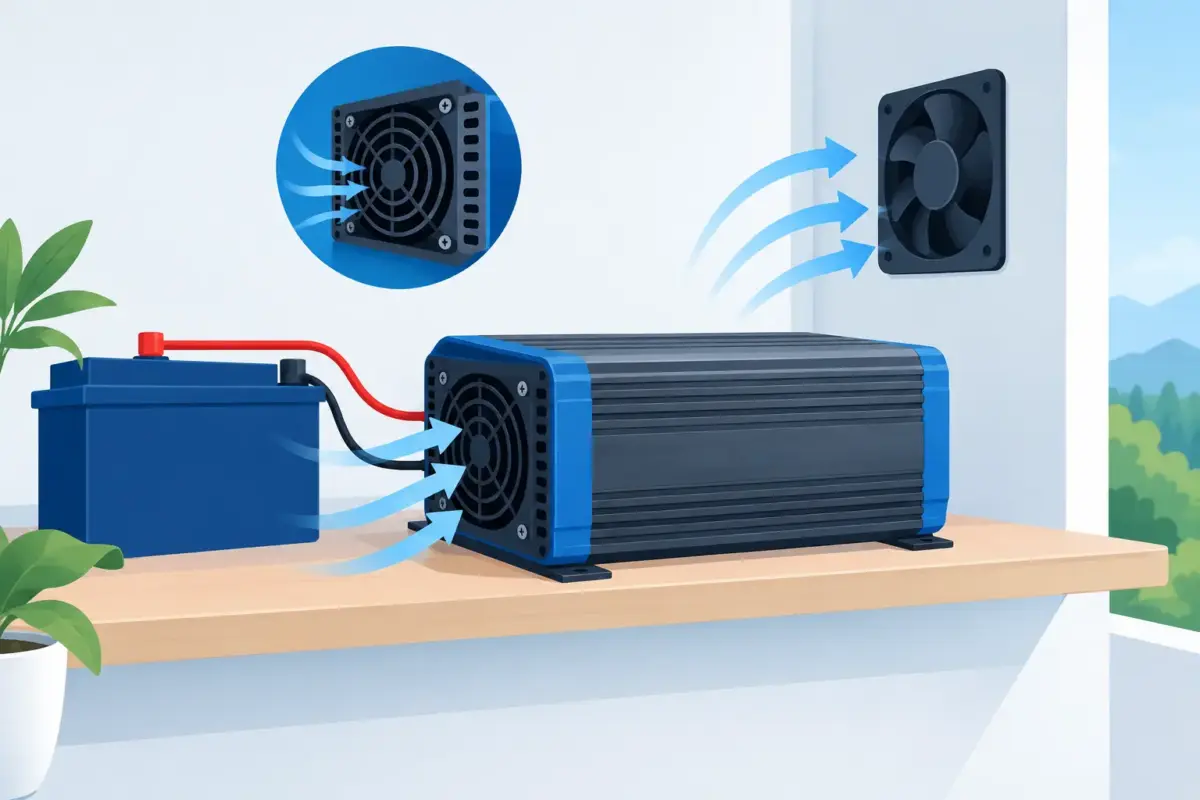
An open, shaded mounting position in a canopy, service locker or under-seat electrical bay may be enough for a modest inverter. A high-output inverter in an enclosed caravan cabinet may require low and high ventilation openings, or forced airflow with a suitably rated fan. Cooler air needs a path in, and heated air needs a path out. A single small hole in an otherwise sealed box rarely achieves much.
Internal fans are not a substitute for airflow
The fan inside an inverter moves air through the inverter, not magically out of a sealed compartment. If it keeps recirculating hot air, the unit will progressively run hotter. Fan noise is also a clue worth paying attention to. If the fan is constantly at full speed during moderate loads, check the mounting space before assuming that is normal operation.
Do not cover an inverter with carpet, clothing, recovery gear or loose canvas to quieten the fan. It restricts cooling and can create a fire risk. Keep the installation area clear and make sure dust cannot build up across vents.
Choosing a suitable mounting location
The best location balances cooling, cable length, access and protection from weather. In mobile 12V and 24V systems, there is no perfect position, but there are several poor ones to avoid.
Do not mount an inverter in the same sealed enclosure as flooded lead-acid batteries unless the equipment and enclosure are specifically designed for that arrangement. Batteries can release corrosive or flammable gases while charging. Electrical equipment that can spark, including inverter switches and relays, should be separated from battery gases. A vented battery box and a separate inverter compartment are the safer approach.
Avoid engine bays unless the inverter is specifically rated and installed for that environment. Under-bonnet heat, moisture, vibration and dirt are hard on electronics. Also avoid wet lockers, unsealed exterior compartments and areas likely to collect dust, mud or salt spray. Marine installations need particular care, as salt-laden air accelerates corrosion around terminals and cooling vents.
Mount the inverter on a solid surface in the orientation approved by its manufacturer. Some models are designed to be mounted horizontally or vertically, while others need a particular orientation so heat can rise through the case correctly. Leave access to the DC terminals, AC outlets, fuses and any reset button. An inverter buried behind fixed cabinetry is inconvenient when you need to inspect a connection or isolate a fault.
Match ventilation to inverter load, not just size
A 2000W inverter does not create the same heat all the time. Its heat output changes with the AC load. However, sizing ventilation only around occasional use is a common mistake. Consider the longest realistic load you will run, the hottest expected conditions and whether the compartment shares heat with chargers, DC-DC chargers, solar regulators or battery monitors.
For example, an inverter used to charge cordless-tool batteries for 20 minutes may cope in a reasonably open canopy compartment. The same inverter powering an induction cooktop or coffee machine during a hot lunch stop may need far more airflow. In a work ute, an inverter operating tools through the day can produce sustained heat even when no single appliance appears particularly demanding.
Efficiency matters as well. A 90 per cent efficient inverter delivering 1000W of AC power may still produce around 110W of heat. That is similar to adding a small incandescent globe inside the compartment continuously. At higher loads, the heat burden increases. Poor DC connections and undersized cable can add more heat before power even reaches the inverter.
Installation details that prevent heat problems
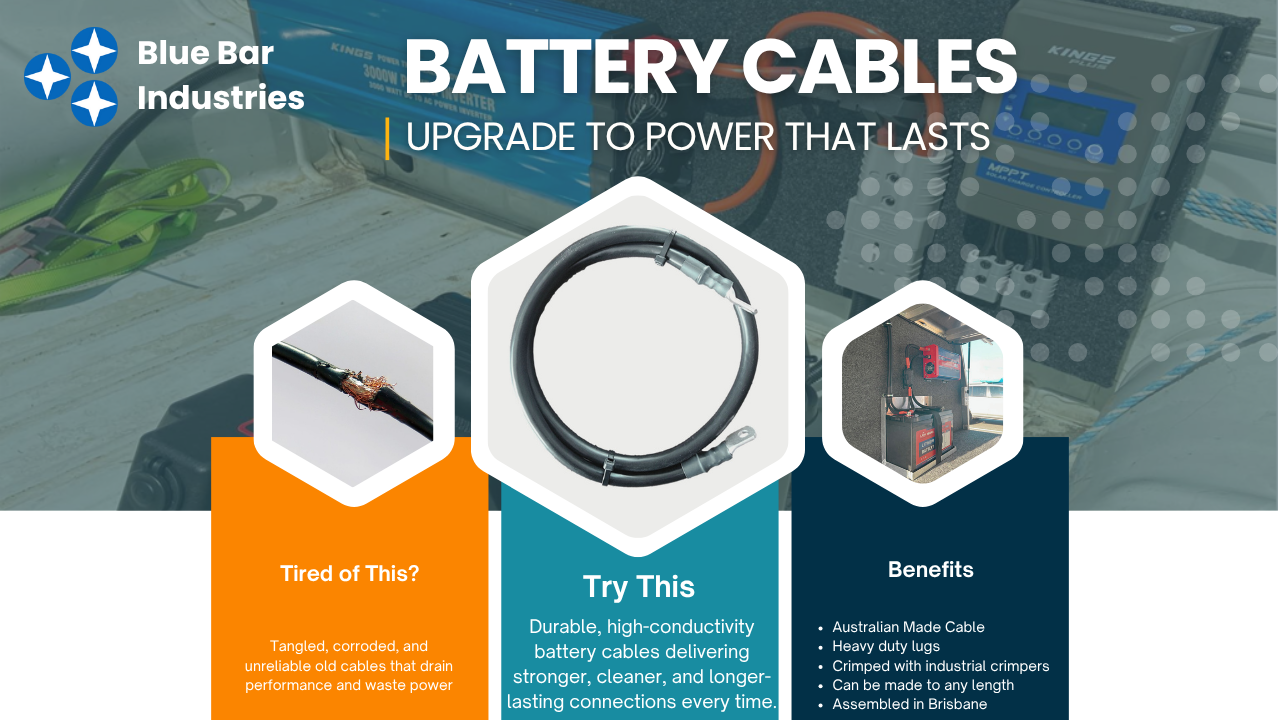
Start with correctly sized DC cable, appropriate fusing close to the battery and quality crimped lugs or connectors. High-current inverter circuits need low-resistance connections. Loose terminals, undersized cable and poor joints generate heat, create voltage drop and can cause the inverter to work harder or alarm under load.
Keep cable runs as short as practical, particularly between battery and inverter. This is not just about performance. Less voltage drop means lower current stress and fewer heat-related issues in the system. Protect cables where they pass through metal or cabinetry, and secure them so vibration cannot fatigue terminals over corrugations.
For enclosed installations, think about the complete airflow path. Put intake and exhaust openings where they will not be blocked by stored gear, and avoid drawing in hot air from another electrical compartment. If using forced ventilation, select a fan that can run reliably in the environment and wire it with suitable protection. A thermostatically controlled fan can reduce noise and unnecessary current draw, but it must switch on early enough to be useful.
Do not rely on a sealed box with a fan blowing around inside it. The hot air still has to leave the enclosure. Equally, do not create large unprotected openings where dust, insects and water can enter freely. Louvered vents, sensible placement and periodic cleaning are usually a better compromise for touring and trade vehicles.
Signs your inverter is running too hot
Thermal alarms, reduced output, unexplained shutdowns and a fan that runs flat out are the obvious warning signs. A hot smell, discoloured cable insulation, soft plastic around terminals or excessive warmth at DC connections need immediate investigation. Switch the system off before tightening or remaking connections.
It is normal for an inverter case to become warm under load. It is not normal for the surrounding compartment to become heat-soaked after modest use. Check the inverter at the load levels you genuinely expect to use, not only while running a phone charger in the driveway. Test with the doors and lids closed, because that is how the system will operate on the road or at camp.
For a dependable setup, treat inverter ventilation as part of the electrical design from the start. Allow room around the unit, use cable and protection gear suited to the current, keep battery gases separate and test the installation under a real load before relying on it away from home.