

 Cable Automotive / Marine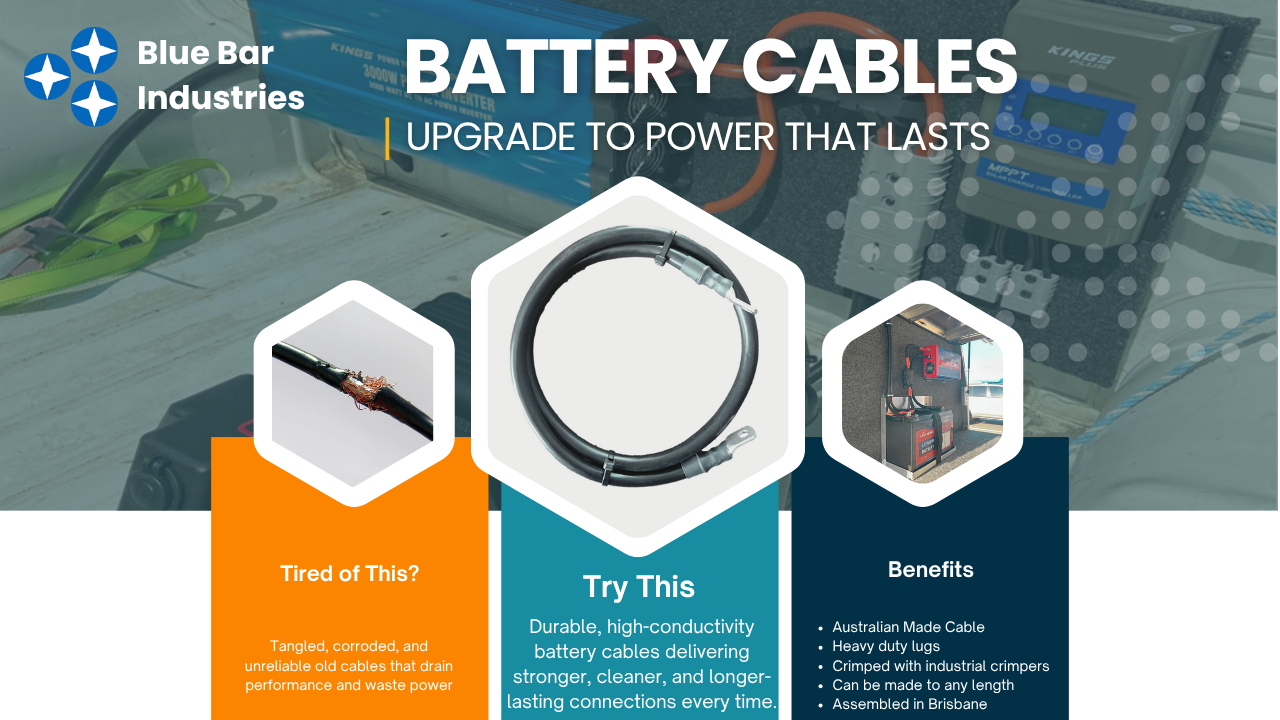
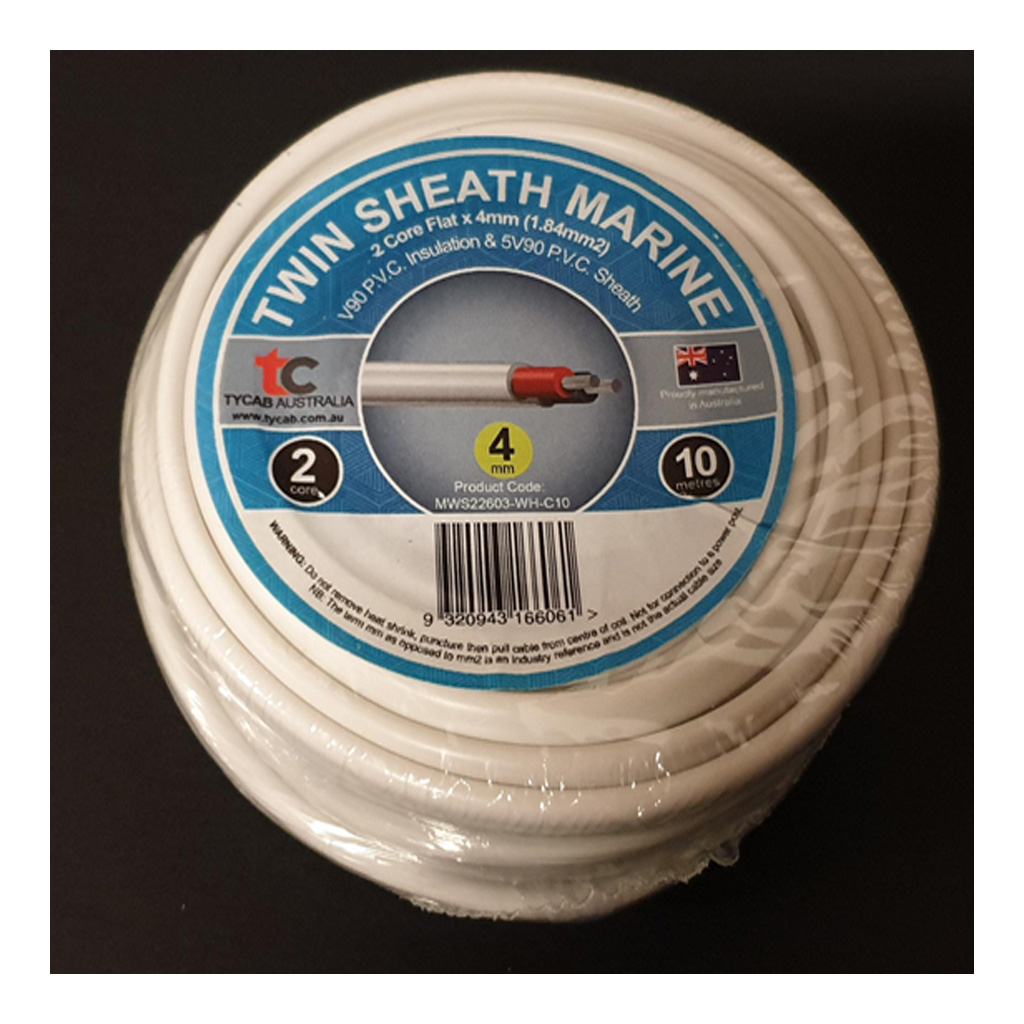
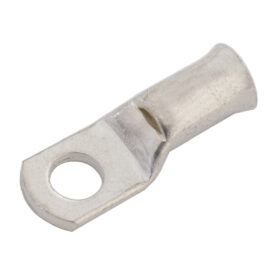 Cable Lugs
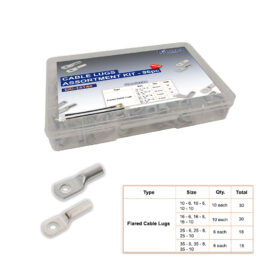 Cable Lug Assortment Kits
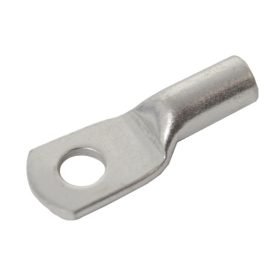 Cable Lugs Straight Wall Closed
 Cable Glands
 Convoluted Split Tubing
 12/24v Products & Access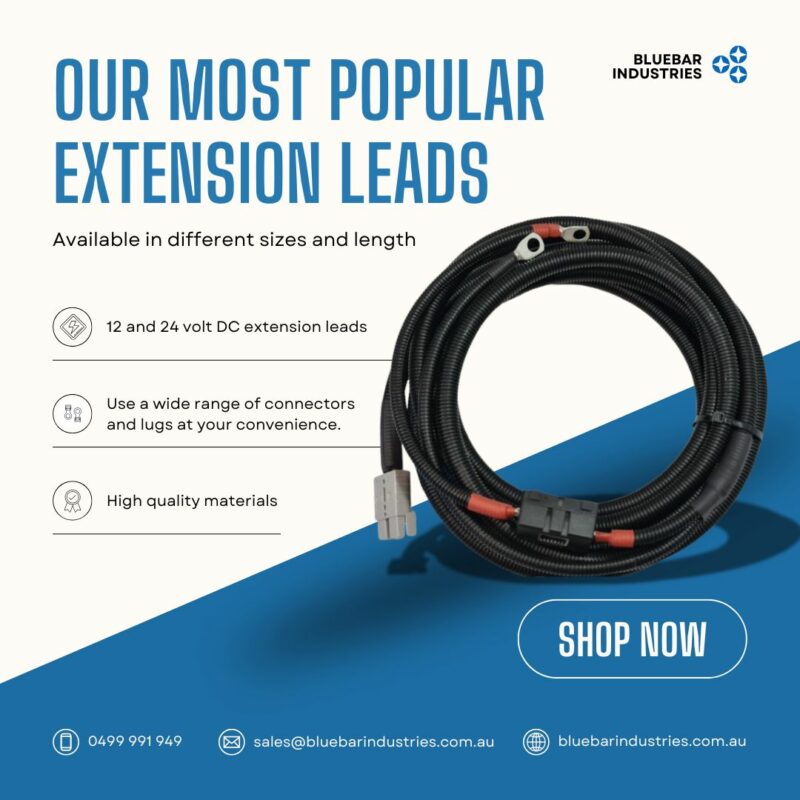
 Electrical Connectors
 Solar Powered Products
 LED Lights
 Tools
Tools

 Auto Parts & Categories

 Fittings
 Cleaning & Misc
 Clearance & Promotion
Latest News
Custom Battery Leads for 12V and 24V Setups
Jun
A battery lead that is 100 mm too short, the wrong lug size, or built with cable that cannot handle the load will usually tell you at the worst possible time. That might be on a corrugated track, at a boat ramp, or halfway through fitting out a work ute. Custom battery leads solve that problem by matching the cable, terminals, length and protection to the actual job, not a rough guess.
For anyone building or repairing 12V and 24V systems, that matters. A proper lead does more than connect positive to positive and negative to negative. It affects voltage drop, current handling, fitment, serviceability and long-term reliability in heat, dust, moisture and vibration. Off-the-shelf options can work well in straightforward setups, but once the run length, connector type or installation space changes, custom-built leads usually make more sense.
Why custom battery leads make sense
A lot of electrical faults are not component failures. They are cable and connection problems. Undersized cable, poorly crimped lugs, exposed terminals, unsupported runs and stretched leads all create weak points. In a vehicle or mobile power system, those weak points get punished by vibration, movement and weather.
Custom battery leads remove many of those compromises. Instead of adapting your installation around whatever lead happens to be on the shelf, you specify a lead around the battery, tray, isolator, fuse block, inverter, charger or connector you are actually using. That gives you a cleaner fit and usually a safer one.
There is also a performance angle. As current increases, cable size and cable length matter more. A small fridge circuit and a high-draw inverter circuit are not in the same category. The lead that suits a light accessory feed may be completely wrong for a winch, dual-battery link or DC charger input. A custom lead lets you build to the application rather than trying to make one generic option do every job.
Where custom battery leads are commonly used
In Australian 12V and 24V setups, custom leads are common anywhere there is limited space, non-standard equipment or higher current demand. Dual-battery systems are a clear example. Once you add a battery tray under a bonnet, in a canopy, behind a seat or in a caravan front boot, lead length and routing become specific very quickly.
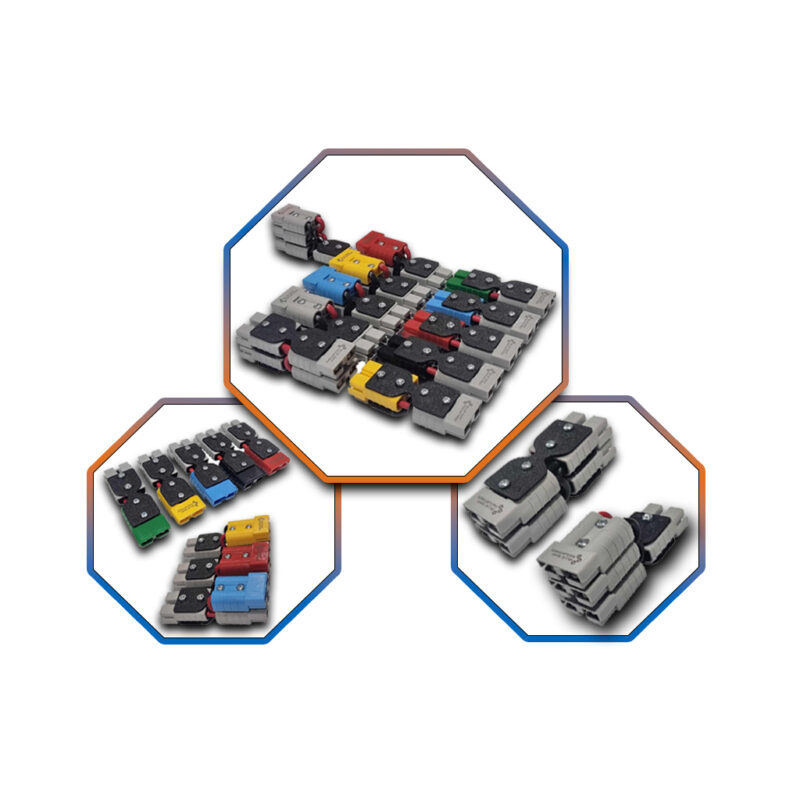
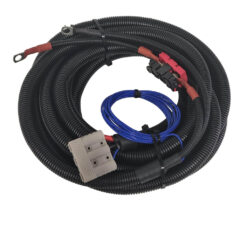
The same applies to Anderson plug connections, solar inputs, battery-to-battery charger feeds, marine battery links and auxiliary power in service vehicles. Workshop fit-outs also benefit from custom lengths because a tidy, well-supported installation is easier to inspect and service later.
For trade users, repeatability matters too. If you fit the same fleet accessories across multiple vehicles, properly specified leads help keep the installation standard consistent. For retail buyers, the main value is usually simpler fitment and fewer headaches.
Choosing the right cable size
Cable size is one of the first decisions that needs to be right. Too small, and you get excess voltage drop, heat and poor performance. Too large, and you may end up with unnecessary cost and a cable that is harder to route in tight spaces. There is no single best size for all custom battery leads because the right choice depends on current draw, total run length and how critical voltage stability is for the equipment.
A short link between battery and fuse holder is a different job from a long run to the rear of a wagon or canopy. Likewise, a charger input may have different requirements from a compressor or inverter supply. If the circuit is feeding sensitive gear or high current loads, getting the cable size right is not optional.
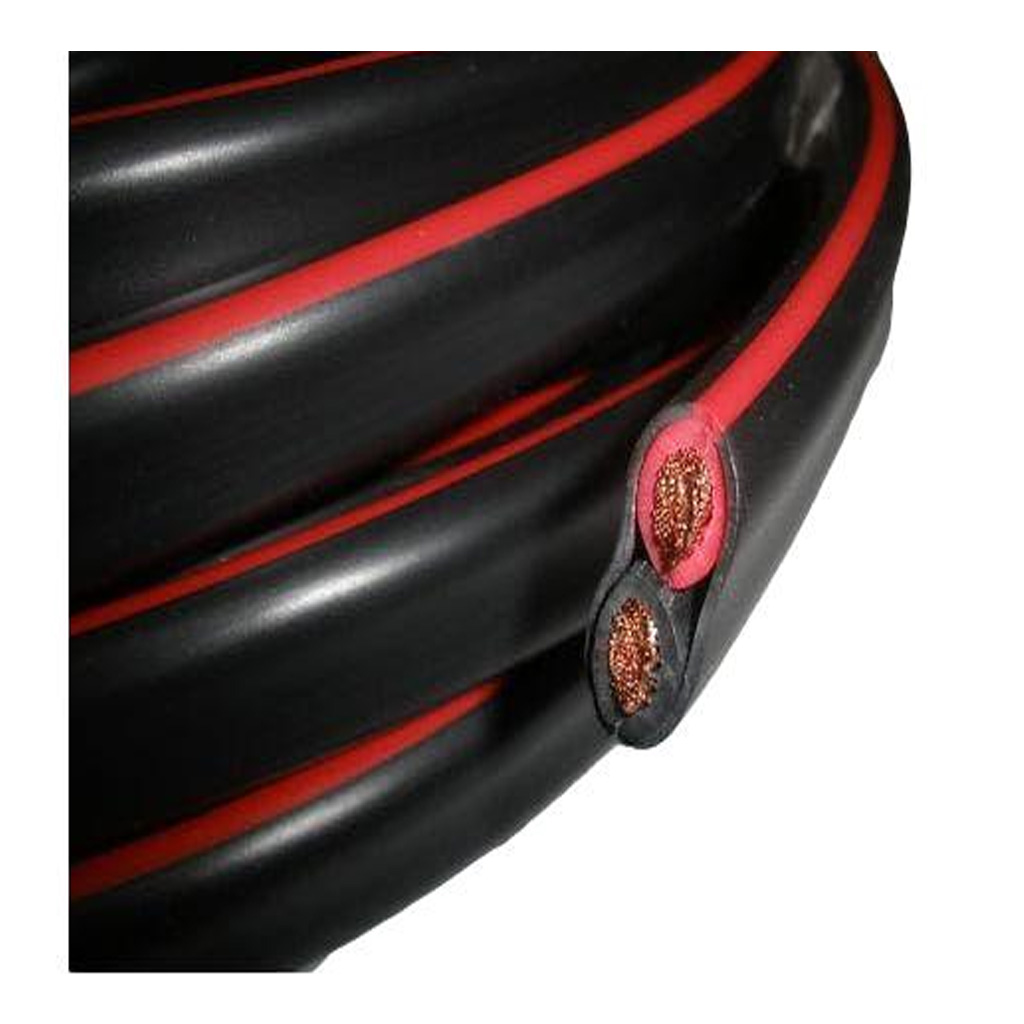
Conductor quality and insulation quality also matter. In harsh conditions, cable needs to cope with abrasion, temperature and movement. Fine-strand flexible cable is often the better choice in automotive and mobile applications because it handles routing and vibration better than stiffer alternatives.
Length is not just a measurement
It is easy to think of lead length as a fitment detail, but electrically it has a direct effect on performance. Longer runs increase resistance, which increases voltage drop. That can mean slower charging, reduced efficiency or equipment that does not perform as it should under load.
That is why accurate measuring is worth the extra effort. A lead should not be so tight that it pulls on the terminal, and it should not be so long that it creates unnecessary loops, clutter or rub points. The aim is enough length for secure routing and service access, without wasted cable.
Terminals, connectors and fitment details
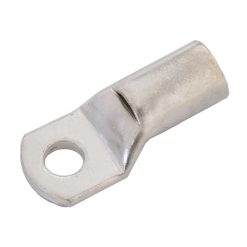
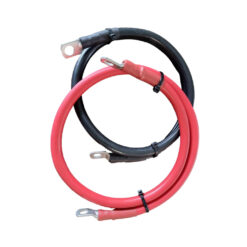
A lead is only as good as the termination on each end. Lug size, stud size, connector type and insulation all need to suit the hardware in the system. One setup may need ring terminals for battery posts and chassis earth points. Another may require Anderson connectors, inline protection or a combination of lugs and plugs.
This is where custom battery leads earn their keep. You can match the termination to the actual battery terminal, isolator stud, busbar or accessory socket being used. That reduces the temptation to force mismatched parts together, which is where poor contact and heat build-up often start.
Heatshrink, terminal boots and protective sleeving are worth considering as part of the finished lead, not as afterthoughts. In engine bays, underbody routes, marine compartments and canopy installs, protection against abrasion and accidental shorting is part of doing the job properly.
Crimp quality matters more than most people think
A cable may look heavy-duty from the outside and still fail at the joint if the crimp is poor. A proper crimp creates a secure mechanical and electrical bond. A bad one can loosen over time, increase resistance and generate heat.
This is one reason many installers prefer purpose-built leads over improvised workshop fixes. The visible part of the cable is only half the story. Reliable termination is what turns good components into a lead that actually lasts.
Custom battery leads for different applications
Not all installations place the same demands on a lead. In a 4WD touring setup, vibration resistance, abrasion protection and sensible routing are usually high priorities. In a caravan or camper, longer cable runs and charging efficiency often become the bigger issue. In marine use, corrosion resistance and secure insulation carry extra weight.
Workshop and trade vehicles often need a more serviceable layout. The lead should be easy to trace, easy to isolate and suitable for repeated maintenance work. Mining and industrial environments can add another layer again, where durability and fit-for-purpose components matter more than cutting a few dollars off the build.
That is why a one-size-fits-all approach rarely holds up for long. The best result usually comes from starting with the equipment, the mounting position and the current requirement, then building the lead around that.
When off-the-shelf is enough and when it is not
There are plenty of jobs where a standard battery lead is perfectly suitable. If the application is simple, the length is correct, the terminals match and the current demand is within the cable rating, an off-the-shelf option can be the quickest path.
The problem starts when even one of those factors is off. A lead that almost fits often gets stretched, rerouted badly or adapted with extra joins. That is usually where reliability starts to slip. For straightforward temporary work, you might accept that. For a permanent install in a touring vehicle, caravan, boat or work fleet, it is rarely worth the compromise.
Custom leads are usually the better call when routing is tight, equipment is mounted away from the battery, connectors need to be specific, or the system includes higher-current components. They also make sense when you want a cleaner finish that looks like it belongs in the vehicle rather than something patched together on the bench.
Getting the specification right
The easiest way to end up with the right lead is to be clear about the actual installation. That means knowing the required length, cable size, terminal type, stud size, polarity and intended use. If the lead is for a charger, inverter, starter battery link, solar input or rear power distribution, that should be stated from the start because the application changes the specification.
It also helps to think about where the lead will run. Engine bay heat, chassis routing, canopy edges and marine exposure all affect the level of protection needed. A lead built for internal cabinet use may not suit an exposed under-vehicle route.
For buyers who work on 12V and 24V systems regularly, that kind of detail is standard practice. For DIY users, it is still worth slowing down and measuring properly before ordering. One well-made lead is cheaper than replacing the wrong one and troubleshooting the results later.
Bluebar Industries supports both trade and retail buyers who need practical power gear that suits real installations, whether that is a straightforward replacement lead or a more specific custom build.
A good battery lead is not the flashiest part of a power system, but it is one of the parts that decides whether the rest of the system works properly. If the setup matters, the lead should match the job.