

 Cable Automotive / Marine
 Cable Lugs
 Cable Lug Assortment Kits
 Cable Lugs Straight Wall Closed
 Cable Glands
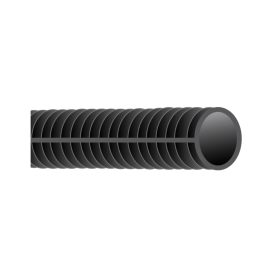 Convoluted Split Tubing
 12/24v Products & Access
 Electrical Connectors
 Solar Powered Products
 LED Lights
 Tools
Tools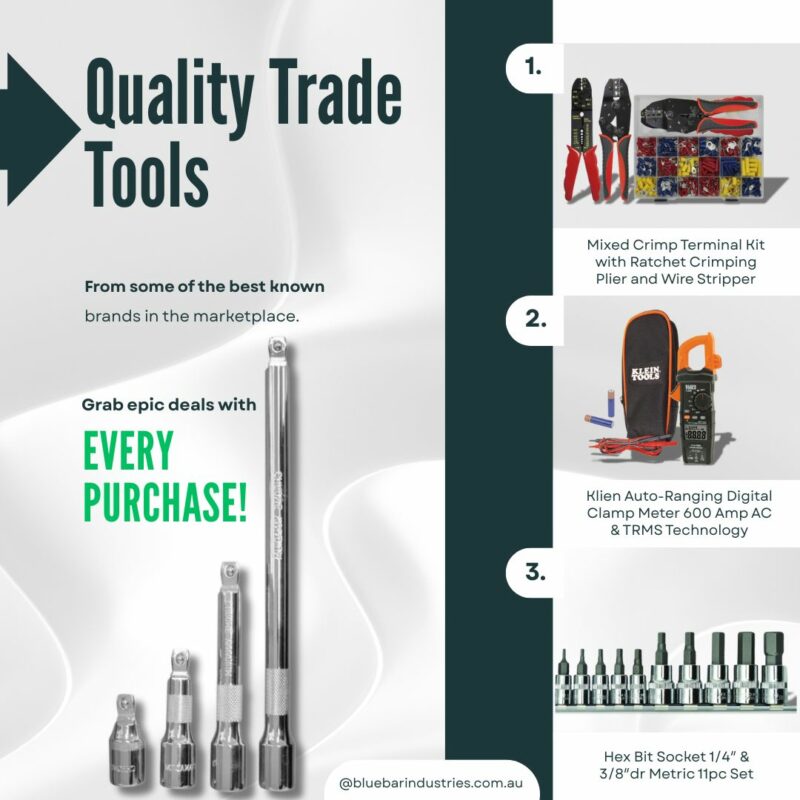


 Auto Parts & Categories

 Fittings
 Cleaning & Misc
 Clearance & Promotion
Latest News
Split Conduit for Automotive Wiring
Jun
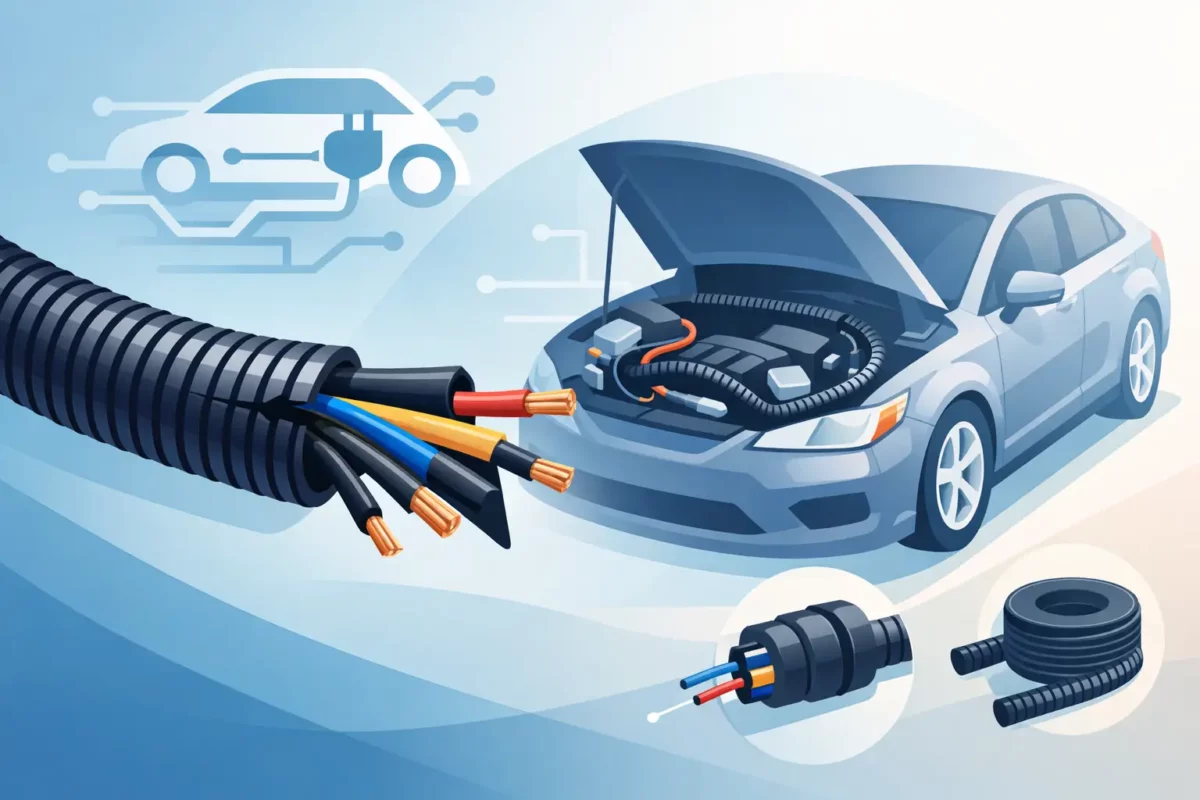
A wiring job can look tidy on day one and still fail six months later if the cable protection is wrong. In engine bays, under trays, behind dashboards and along chassis rails, split conduit for automotive wiring does a simple but critical job – it shields cables from abrasion, heat, vibration and general punishment that comes with real vehicle use.
For anyone building or repairing 12V and 24V systems, conduit is not an afterthought. It is part of the installation. Whether you are running power to a fridge in a touring wagon, protecting trailer wiring, or tidying up accessory looms in a work ute, the right conduit helps prevent faults that are expensive to trace later.
What split conduit for automotive wiring actually does
Split conduit is a flexible plastic sleeve with a lengthwise slit that lets you insert cable without de-pinning plugs or rebuilding the loom. That slit is the reason it is widely used in automotive and mobile power work. It saves time, especially on retrofits, repairs and accessory installs where the wiring is already terminated.
Its main role is mechanical protection. Cable insulation is not designed to rub directly on bodywork, brackets, sharp edges or corrugated mounting surfaces for years on end. Conduit adds a sacrificial layer between the cable and the vehicle. In many applications, that is what stops a minor rub point from becoming a short circuit.
It also helps organise a run. Multiple wires grouped inside conduit are easier to route, secure and inspect than loose cable. That matters in a workshop, and it matters even more when you need to fault-find quickly in the field.
Where split conduit works best
You will see split conduit used across almost every part of a vehicle, but some areas benefit more than others. Under-bonnet wiring is the obvious one because of constant heat cycling and vibration. Auxiliary lighting looms, dual-battery cabling, compressor wiring and sensor runs all need proper protection if they are going to last.
Chassis-mounted wiring is another common application, particularly on 4WDs, caravans, trailers and service bodies. Dust, road spray, stone strike and movement all work against exposed cable. A conduit sleeve will not make poor routing acceptable, but it does add a useful layer of defence.
Inside the cabin, split conduit is often used behind trim, under seats and around battery or accessory installations. It keeps things neater and reduces wear where cables pass through confined spaces. In marine and industrial settings, the same logic applies, although material choice becomes even more important depending on UV, salt and chemical exposure.
Choosing the right split conduit size
Sizing sounds simple, but it is where plenty of jobs go off track. If the conduit is too small, you will fight it during installation and may end up stressing the cable or leaving sections exposed. If it is too large, the loom can move around inside, look untidy and become harder to secure properly.
A good starting point is to measure the outside diameter of the cable bundle rather than guessing from the number of wires. Insulation thickness varies, and so does the shape of the loom once it is taped or grouped. You want a conduit size that comfortably closes around the bundle without forcing it.
It is also worth thinking about future additions. If you know the customer is likely to add a UHF, extra lighting or a brake controller later, allowing a bit of spare capacity can save rework. The trade-off is neatness. Oversizing too much just creates a bulky run that is harder to clamp and route.
Light-duty versus heavy-duty conduit
Not all split conduit is built for the same environment. Light-duty conduit can be fine for interior runs and low-risk areas where abrasion is limited. Heavy-duty conduit is the better choice where wiring is exposed to rough surfaces, movement, debris or more demanding workshop and fleet conditions.
This is one of those areas where cheap product usually shows its weakness quickly. Thin wall conduit can split too easily, go brittle with heat, or flatten out under clamping pressure. For automotive and trade use, material quality matters more than saving a few dollars on the initial job.
Heat, UV and environmental exposure
Conduit selection should match the environment, not just the cable diameter. Under-bonnet temperatures can get high, especially near turbo plumbing, exhaust components and tightly packed engine bays. Standard conduit may be acceptable in some areas, but not all. If the run passes close to major heat sources, you may need higher temperature protection or an additional heat sleeve.
UV resistance is another factor that gets missed on touring rigs, caravans and trailers. Any conduit mounted where it sees regular sun needs to hold up outdoors. If it goes chalky and brittle after a season, it stops doing its job.
Mud, oil, fuel vapour and chemical washdown can also affect service life. In trade fleets and mining applications, that can be the difference between a tidy installation and recurring electrical repairs. The best result usually comes from matching conduit type to the worst conditions the vehicle will actually see, not the best.
How to install split conduit properly
Good conduit will not rescue poor installation practice. The cable still needs to be routed away from sharp edges, moving parts and high heat. If the loom can flap around freely, the conduit will wear as well. Secure mounting is part of cable protection, not a separate issue.
Start by laying out the run with natural bends rather than tight corners. Feed the cable into the conduit without twisting it, and avoid stretching the slit open more than necessary. Once in place, support the loom at sensible intervals with clips, clamps or ties suited to the environment.
Where the cable passes through metal panels, conduit alone is not enough. Use a grommet or proper edge protection at the penetration point. The conduit protects along the run, but the panel edge is still a concentrated wear point.
Common mistakes to avoid
One of the most common mistakes is leaving conduit ends unsecured near high-vibration areas. Over time, the sleeve can creep, exposing cable exactly where protection is needed most. A simple tape wrap, clamp or tie near the end often solves that.
Another issue is routing conduit directly against hot engine components and assuming the plastic will cope. It might for a while. Then it hardens, deforms or fails. Heat clearance always matters.
There is also a tendency to use split conduit as a cosmetic fix for messy wiring. If the cable gauge is wrong, joins are poor, or the route is unsafe, adding conduit only hides the problem. Protection works best when the underlying electrical work is sound.
Split conduit versus other cable protection options
Split conduit is popular because it is flexible, fast to install and practical for retrofits. But it is not the only option, and sometimes it is not the best one.
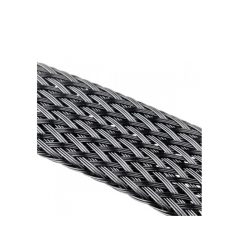
Corrugated split conduit is excellent for general-purpose loom protection. Braided sleeving can offer a neater finish in visible areas and can be easier to work with on complex shapes, though it may not provide the same crush resistance. Heat sleeve products are better where radiant temperatures are the main threat rather than abrasion. Rigid conduit can make sense in fixed industrial environments, but it is less forgiving on vehicles with constant vibration and movement.
In other words, it depends on the job. If the priority is quick loom protection on a 4WD accessory install, split conduit is usually the practical choice. If the run sits close to exhaust heat or needs a very clean OEM-style finish, another protection method may be more suitable, or used in combination.
Why quality cable protection pays off
Most wiring faults do not start as dramatic failures. They begin as rubbing, hardening, cracking or a loose unsupported section that gradually gets worse. By the time the fuse blows or the accessory cuts out, the original cause can be buried behind trim, under a tray or halfway down a chassis rail.
That is why installers who have done enough fault-finding tend to be fussy about cable protection. The right conduit does not just make the job look better. It reduces call-backs, protects the customer’s gear and helps the system hold up in Australian conditions.
For trade buyers and serious DIY users, that matters. A fridge feed, brake controller, driving light loom or solar input is only as dependable as the way it was installed. Bluebar Industries supplies cable protection products for real-world 12V and 24V work, where neatness counts but long-term reliability counts more.
If you are choosing parts for your next wiring job, treat conduit the same way you would treat cable, terminals and connectors – as a component that needs to suit the load, the route and the environment.