

 Cable Automotive / Marine
 Cable Lugs
 Cable Lug Assortment Kits
 Cable Lugs Straight Wall Closed
 Cable Glands
 Convoluted Split Tubing
 12/24v Products & Access
 Electrical Connectors
 Solar Powered Products
 LED Lights
 Tools
Tools


 Auto Parts & Categories

 Fittings
 Cleaning & Misc
 Clearance & Promotion
Latest News
Deutsch Connectors for Automotive Wiring
May
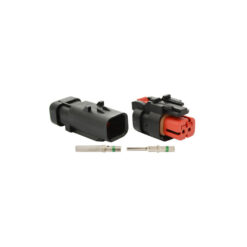
A wiring fault rarely starts as a dramatic failure. More often, it begins with dust in a plug, water tracking into a terminal, or vibration slowly loosening a connection behind a grille, under a tray, or near the chassis. That is exactly why deutsch connectors for automotive wiring are a go-to choice in 12V and 24V setups that need to keep working in real conditions, not just on the bench.
For 4WD touring rigs, caravans, work utes, marine applications and trade vehicles, connector choice matters as much as cable size or fuse protection. A poor connection can cause voltage drop, intermittent accessories, hard-to-trace faults and avoidable downtime. Deutsch-style connectors are widely used because they are compact, sealed and built for environments where moisture, dust, vibration and heat are part of the job.
Why deutsch connectors for automotive wiring are widely used
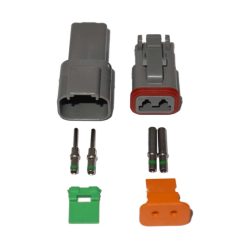
Deutsch connectors are designed around a simple requirement – keep the electrical connection protected while maintaining reliable terminal contact. In automotive wiring, that makes them well suited to engine bays, underbody runs, auxiliary lighting, trailer systems, pumps, compressor circuits and other exposed locations.
Their main advantage is sealing. Unlike basic spade terminals or low-grade plastic plugs, a properly assembled Deutsch connector uses seals and a locking design that helps keep out water, dust and grime. That does not mean they are indestructible or suitable for every circuit, but it does mean they are far better suited to harsh service than many generic connector types.
They also hold up well under vibration. On corrugated roads, mining vehicles, farm equipment and touring setups that spend a lot of time off bitumen, movement is constant. A connector that works loose or allows fretting at the terminal can create intermittent faults that are frustrating to diagnose. Deutsch connectors are popular because they are made to stay connected.
Where they make sense in automotive systems
In practical terms, Deutsch connectors are often chosen for low to moderate current accessory circuits where sealing and serviceability are priorities. Think driving lights, light bars, work lights, reversing lights, air compressors, pressure sensors, pumps, fans and switching circuits. They are also useful where you want a clean disconnect point for maintenance or replacement.
For example, if you are wiring auxiliary lights on a bullbar, a sealed plug is a better option than a join hidden under heat shrink alone. If you are building a removable canopy setup or adding accessories to a tray, a connector that can be unplugged without cutting cable saves time later. The same applies to marine and caravan work, where exposure to weather and movement is hard to avoid.
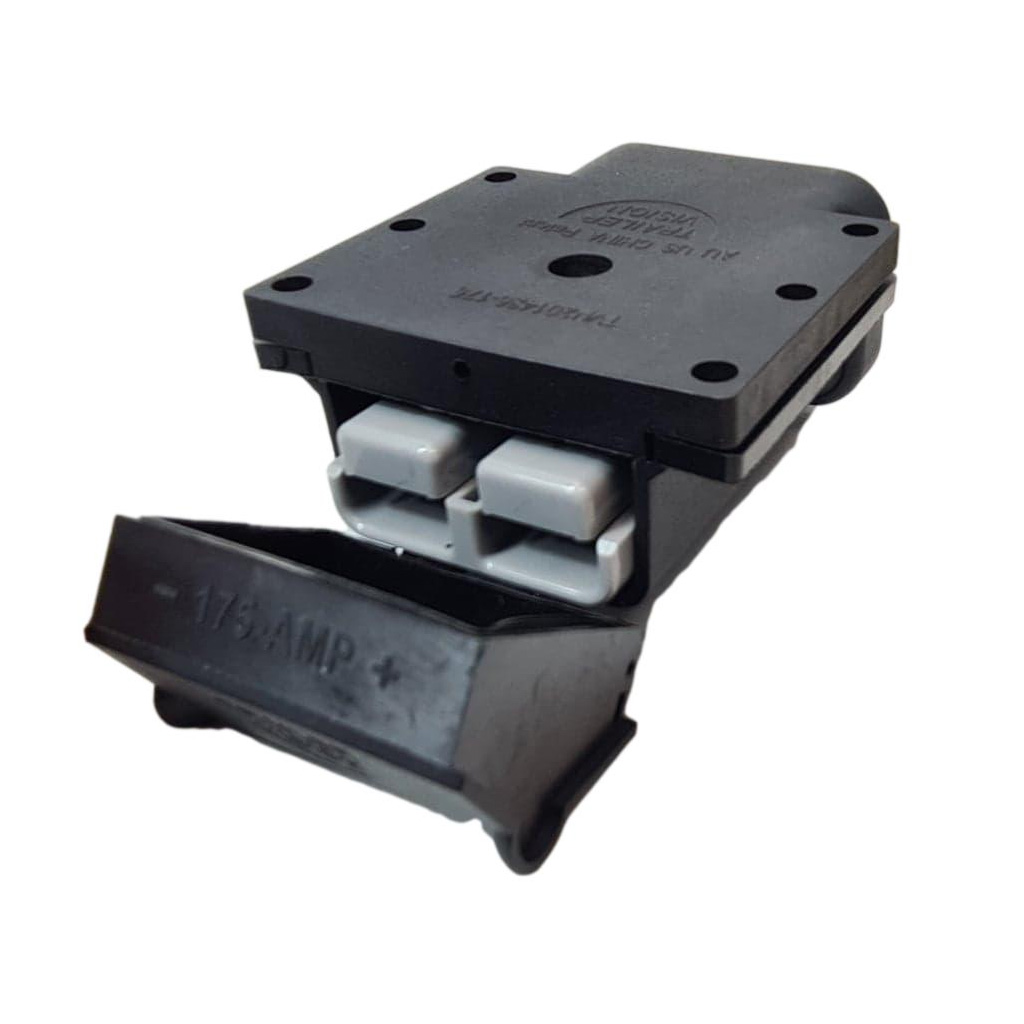
That said, connector choice always depends on the circuit. For high-current battery interconnects or inverter feeds, a Deutsch connector is generally not the answer. Those applications usually call for heavier-duty connection systems designed for much higher current. Deutsch connectors shine in control, signal and accessory power circuits, not every power connection in the vehicle.
Understanding the common types
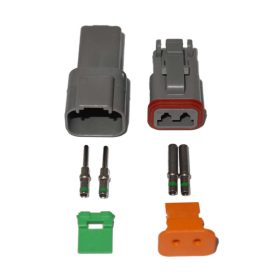
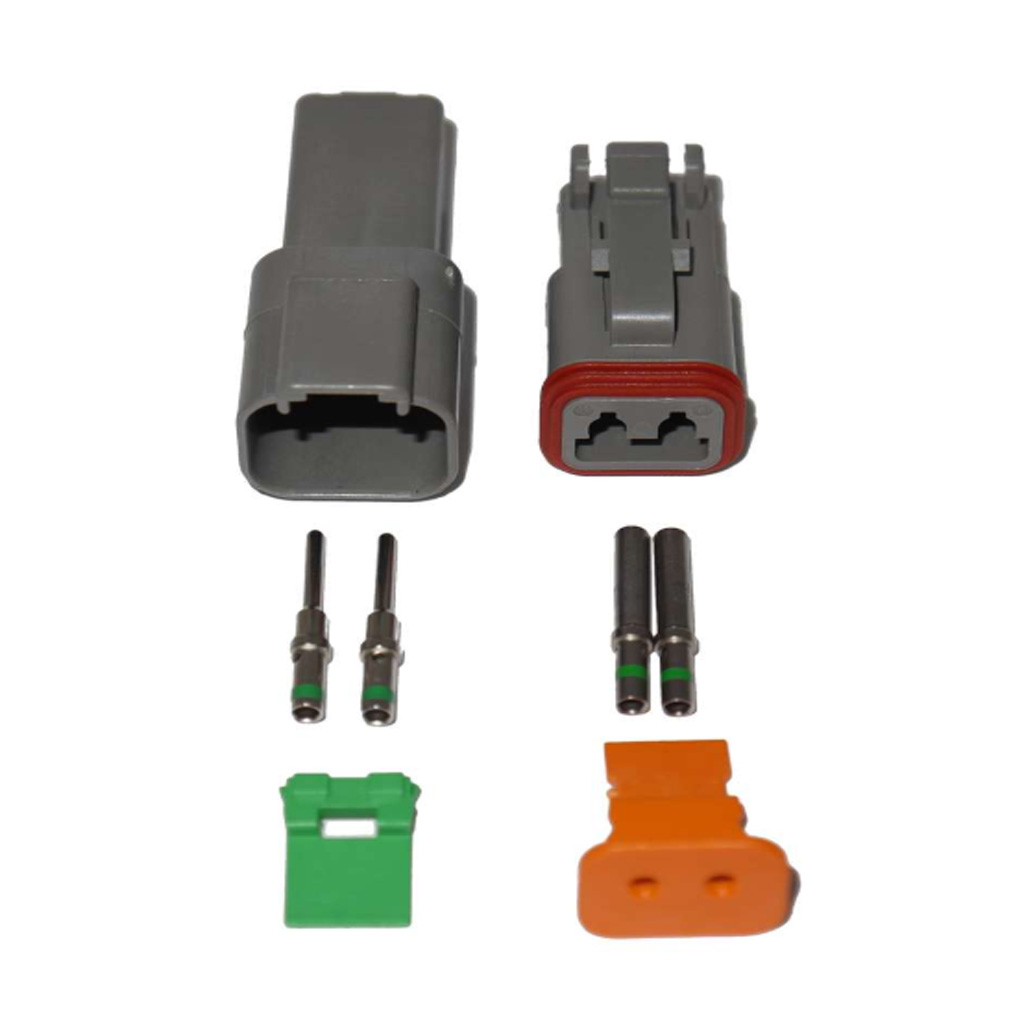
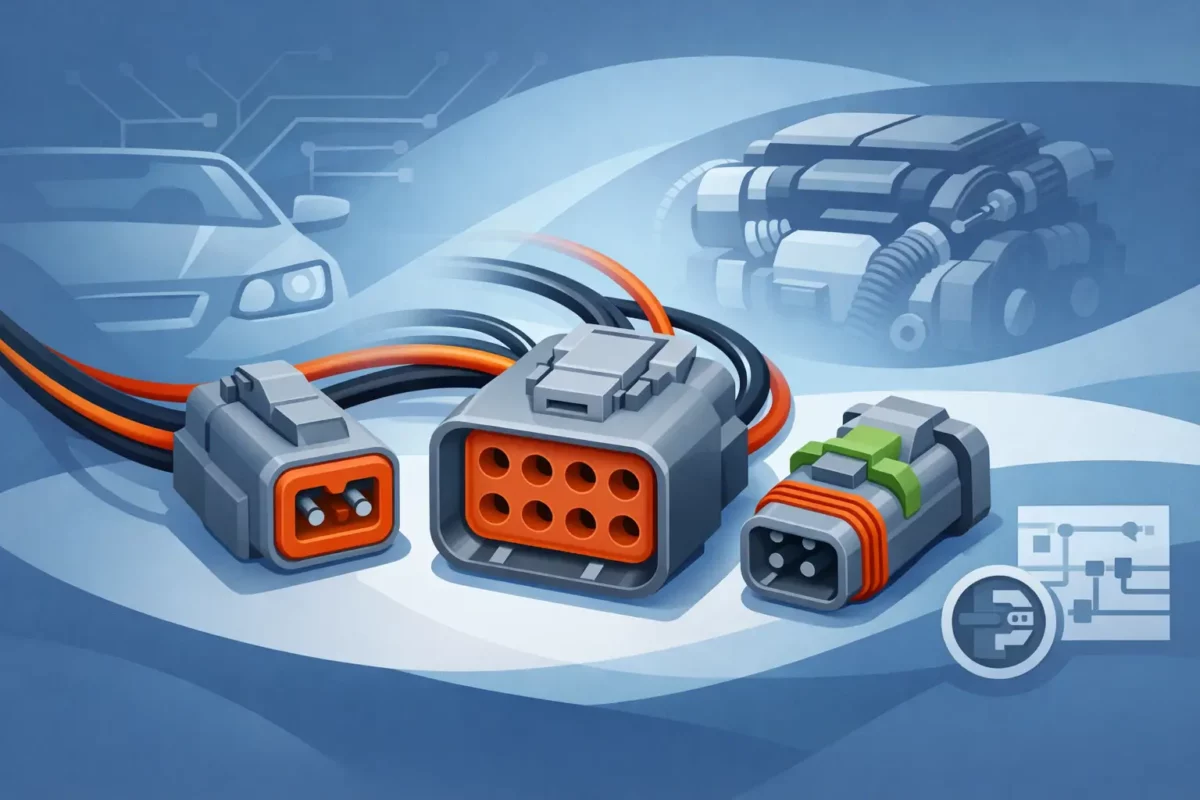
Most buyers will come across Deutsch connector families such as DT, DTM and DTP. The differences matter because current rating, terminal size and overall footprint are not the same.
DT connectors are commonly used in general automotive and off-road accessory wiring. They offer a good balance between size and current capacity, which is why they appear in plenty of aftermarket lighting and equipment installations.
DTM connectors are smaller and better suited to lower-current applications where space is tight. If you are working with sensors, trigger wires or compact looms, that smaller form factor can be useful.
DTP connectors are intended for higher current than the smaller series, but even then, they still need to be matched correctly to the job. Buying on appearance alone is a mistake. A connector might physically fit the space, yet still be the wrong choice for the load or cable size.
Getting the right fit matters more than the brand name alone
A lot of people ask for a Deutsch connector when what they really mean is a sealed automotive plug. That is understandable, but the details matter. The right connector is not just the one with the right number of pins. It also needs to suit the cable size, terminal type, current draw and installation environment.
If the wire is too large for the terminal, you will struggle to crimp it properly. If the wire is too small, the crimp may not hold as it should. If the current draw is higher than the connector and terminal are designed for, heat becomes a risk. And if the connector is mounted where it is under constant strain, even a good connector can fail early without proper loom support.
This is where trade buyers and serious DIY installers usually save time by planning the whole circuit, not just the plug. Cable size, fuse protection, switching method, routing and connector placement all work together.
Installation quality makes or breaks the result
Deutsch connectors have a strong reputation, but they are not magic. A poor crimp, damaged seal or badly routed loom can still cause problems. In workshop terms, the connector is only as good as the assembly.
The correct crimping tool makes a difference. Using side cutters, pliers or an improvised crimp might get a terminal onto the wire, but it will not give the same retention or conductivity as the proper tool. On a vehicle that sees vibration and weather, that shortcut usually catches up with you.
Wire preparation matters too. Stripping too much insulation, nicking strands or forcing the wrong seal onto the cable can compromise the assembly before it is even clipped together. Once installed, the loom should be secured so the connector is not carrying the weight of unsupported cable or getting dragged around by movement.
Placement is another practical consideration. Even sealed connectors should be positioned sensibly where possible. If you can mount a connector away from direct stone strike, constant mud spray or exhaust heat, do it. Good sealing helps, but smart placement still extends service life.
Trade-offs to keep in mind
There is a reason Deutsch connectors are well regarded, but they are not always the cheapest option. If you are wiring a basic internal accessory in a protected cabin location, a sealed connector may be more than you need. On the other hand, using a cheap unsealed connector in an exposed area often becomes false economy.
There is also the tool factor. If you want a proper result, you need the right terminals, wedgelocks, seals and crimping gear. For regular workshop use, that is an easy case to make. For one small weekend job, some buyers weigh up whether the extra cost is justified. Usually, if the circuit is outside the cabin or expected to cop weather and vibration, it is.
Another trade-off is service familiarity. Deutsch connectors are common across automotive, heavy vehicle and industrial work, but not everyone carries replacement parts in the glovebox or workshop drawer. Standardising your builds where possible makes future repairs simpler.
How to choose deutsch connectors for automotive wiring
Start with the circuit load. Work out the actual current draw, not the guessed figure. Then match the connector series and terminals to that load and the cable size you are using.
Next, think about the environment. Engine bay heat, underbody exposure, marine spray, caravan drawbar mounting and external canopy wiring all place different demands on the connection. A sealed connector makes the most sense where contamination or moisture is likely.
Then consider service access. If a component may need to be replaced, disconnected or removed later, using a connector at the right point in the loom is good practice. It can save a lot of time compared with hard-wired joins.
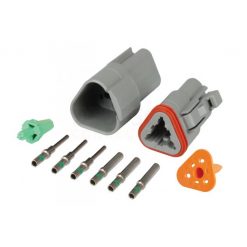
Finally, buy with the full assembly in mind. Housing, pins, sockets, seals, wedgelocks and the right crimp tool all matter. Suppliers that deal with real 12V and 24V installations every day, such as Bluebar Industries, are generally a better place to source that gear than a generic parts seller with limited technical range.
When they are worth it
If you are wiring equipment that has to survive corrugations, rain, dust, washdowns or constant vibration, deutsch connectors for automotive wiring are usually money well spent. They help create cleaner, more dependable installations and make fault-finding less painful later.
That does not remove the need for good design or careful installation. It simply gives the connection a better chance of surviving the conditions Australian vehicles and equipment actually see. Choose the right series, match it to the cable and current, crimp it properly, and support the loom as if the vehicle will spend half its life on rough tracks. In plenty of cases, that small bit of extra effort is what keeps the lights on and the job moving.