

 Cable Automotive / Marine
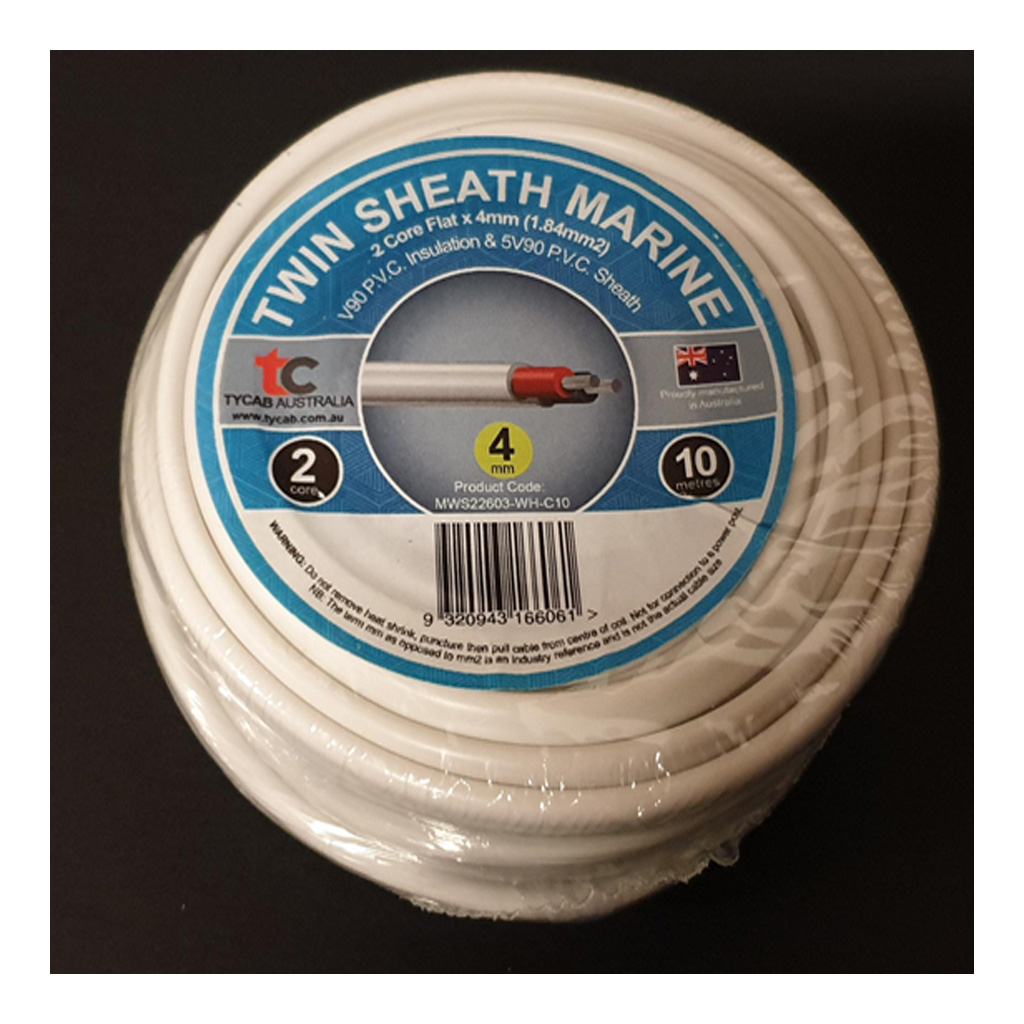
 Cable Lugs
 Cable Lug Assortment Kits
 Cable Lugs Straight Wall Closed
 Cable Glands
 Convoluted Split Tubing
 12/24v Products & Access
 Electrical Connectors
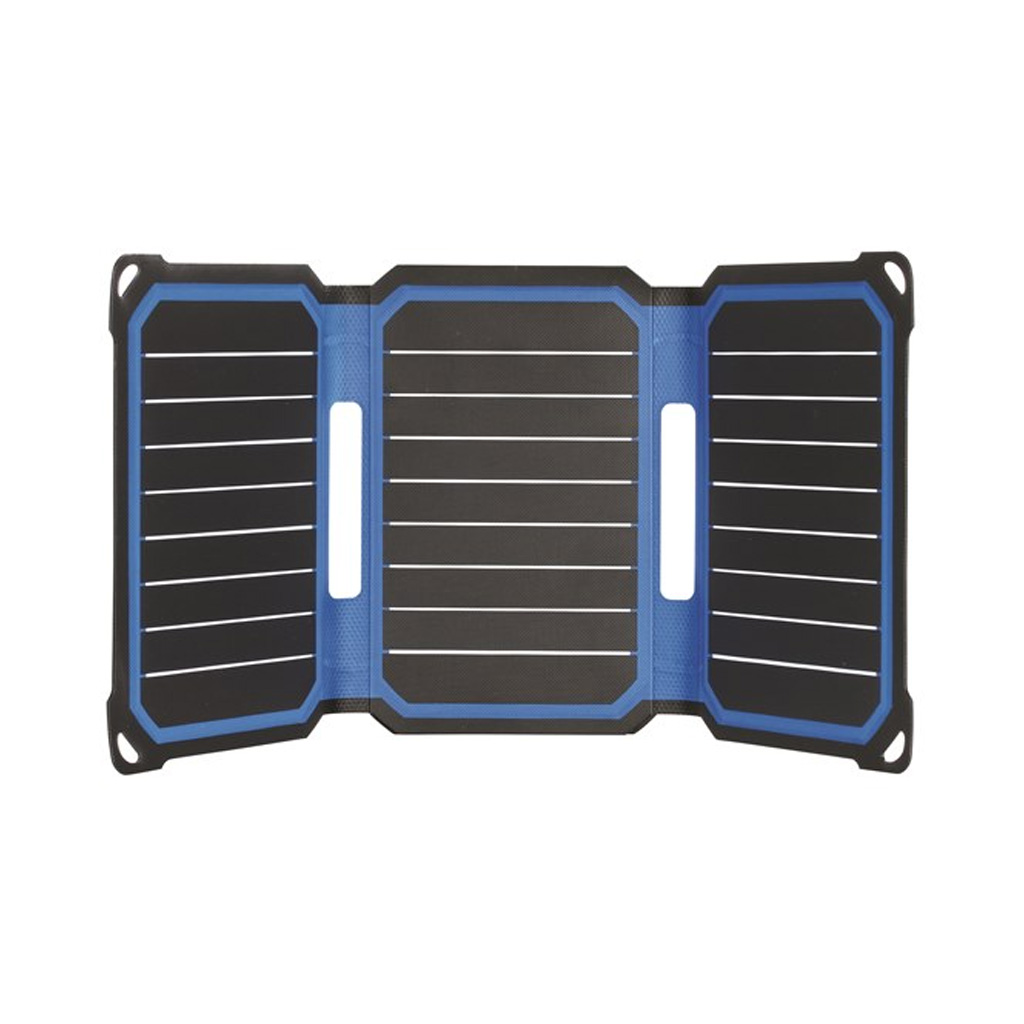
 Solar Powered Products
 LED Lights
 Tools
Tools
 Auto Parts & Categories

 Fittings
 Cleaning & Misc
 Clearance & Promotion
Latest News
Anderson Plug Wiring Size Guide
May
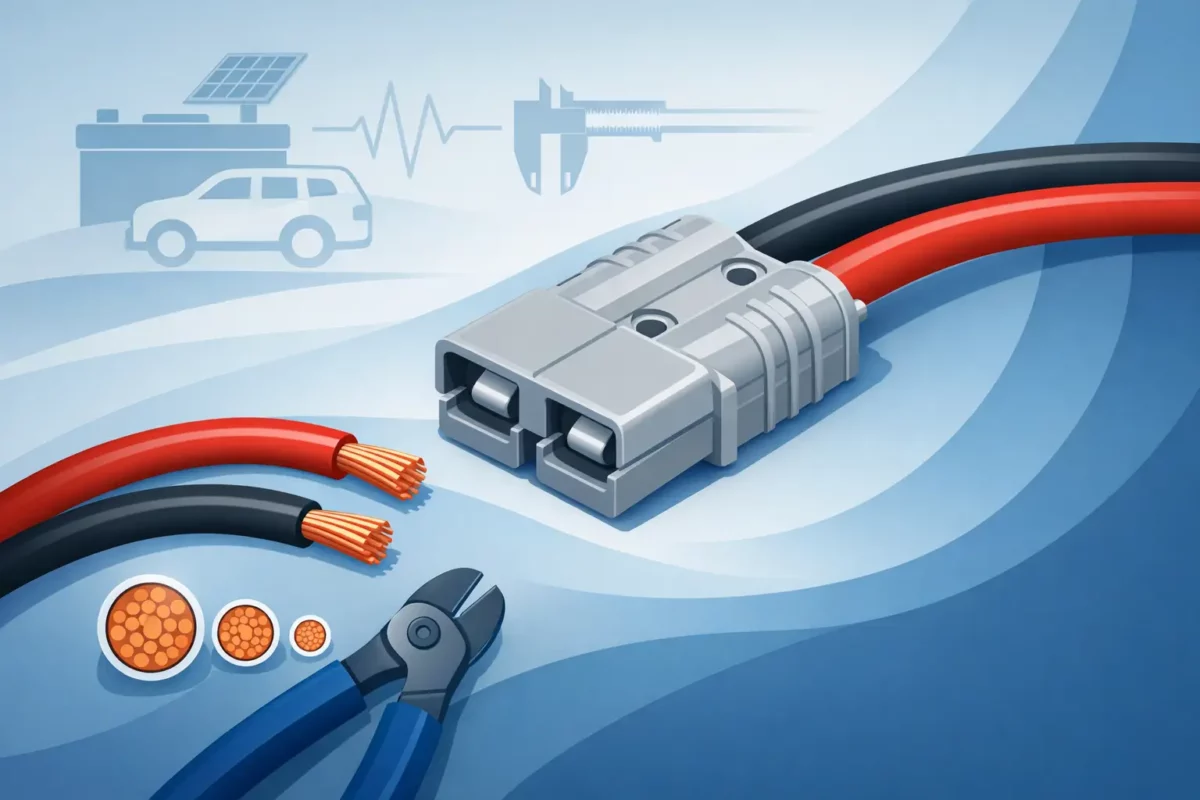
When an Anderson plug runs warm, your fridge cuts out on low voltage, or a charger never reaches its rated output, the problem is often not the plug itself. It is the cable behind it. This Anderson plug wiring size guide is built for the way 12V and 24V systems are actually used across touring rigs, caravans, trailers, workshops and site vehicles in Australia.
A lot of wiring issues come from treating connector size and cable size as the same thing. They are not. You can fit a genuine Anderson style connector to a circuit, but if the cable is undersized for the current and the distance, voltage drop becomes the weak point. In mobile power systems, especially 12V, that matters quickly.
What this Anderson plug wiring size guide is really sizing
An Anderson plug setup has three main limits – the connector rating, the cable rating and the job the circuit needs to do. The right result comes from matching all three.
The connector body might be rated for a certain current, but that does not mean every cable that fits the contact is suitable for that current over a long run. A short lead between a battery and an inverter has different demands to a long feed from a tow vehicle to a caravan battery bank. The current may be similar, but the cable length changes everything.
For most 12V and 24V automotive and auxiliary circuits, you are choosing cable based on current draw and run length first, then confirming the Anderson plug contact suits that cable. That approach avoids the common mistake of building a tidy-looking lead that performs poorly once loaded up.
Why cable size matters more in 12V systems
Low-voltage systems are less forgiving than many people expect. A small voltage loss on paper can be enough to affect gear in the real world. Fridges can throw low-voltage faults, DC-DC chargers can reduce output, and pumps or compressors can run less efficiently.
At 24V, you have more headroom, so the same cable and current can be acceptable over a longer distance. At 12V, voltage drop bites harder. That is why dual-battery feeds, caravan charge circuits and portable solar connections often need heavier cable than first assumed.
Heat is the other issue. Undersized cable creates resistance, and resistance creates heat. In enclosed areas, under trays, inside engine bays or through conduit, that extra heat is not something to ignore.
Anderson plug wiring size guide for common applications
There is no one-size-fits-all cable chart that covers every build, because installation conditions vary. Still, a practical rule of thumb works well for common Australian 12V and 24V setups.
For lighter-duty loads up to around 15A on short runs, such as small portable solar panels, light accessory feeds or short charging leads, 4mm2 to 6mm2 cable may be enough. Once you move into longer runs or currents around 20A to 30A, 8B&S becomes a much safer starting point. For charging circuits between vehicle and trailer, battery-to-battery connections, or medium-demand auxiliary feeds, 8B&S is widely used because it gives a better balance of current handling and voltage-drop control.
For heavier loads or longer runs, 6B&S or 4B&S often becomes the better option. This is common with caravan charging systems, canopies with large battery banks, high-output DC-DC chargers, winch-related auxiliary feeds and inverters. If the cable run is long and the system is 12V, stepping up a cable size is usually cheaper than living with poor performance.
As a working guide, think in these terms. A short lead carrying moderate current can often use a smaller cable. A long run under a ute to the rear tray, then through a trailer drawbar to a battery, usually cannot. That is where many charging complaints start.
Choosing cable by current and distance
Current draw tells you how hard the circuit works. Distance tells you how much resistance the cable adds. Both matter equally.
If you are wiring an Anderson plug for a portable solar panel feeding a regulator close to the battery, current may be modest and the cable run short. In that case, cable size can stay relatively compact. If you are feeding a DC-DC charger mounted in a caravan from the cranking battery in the tow vehicle, the total circuit length is substantial once you count both positive and negative paths. That setup usually needs much heavier cable than people first expect.
A simple way to make the decision is to ask three questions. What is the maximum current? What is the full cable run length? How sensitive is the equipment to voltage drop? Chargers, fridges and electronics generally reward heavier cable. Basic intermittent loads may be more tolerant.
If you are close to the limit, go up a size. In mobile environments, with heat, vibration and dust, having margin is good practice.
Matching Anderson contacts to cable size
The connector contact must suit the cable you are terminating. That sounds obvious, but it is one of the most common fitment issues.
Different Anderson contacts are designed around specific cable size ranges. If the cable is too small for the contact, the crimp can be poor and resistance increases. If the cable is too large, it may not seat correctly or may be impossible to crimp properly without damaging strands. Either way, the connection becomes the weak point.
This is where using the correct contact for the cable matters just as much as choosing the cable itself. A properly matched contact and a clean crimp give a low-resistance joint that stays reliable under load and vibration.
For trade installers, this is standard practice. For DIY users, it is often the difference between a lead that lasts years and one that starts failing after a few trips down corrugated roads.
Don’t ignore voltage drop targets
A lot of people focus only on whether the cable can carry the amps without melting. That is not enough. In 12V and 24V systems, the better question is whether the load still gets the voltage it needs once current is flowing.
For charging circuits and sensitive electronics, keeping voltage drop low is usually the main goal. For many setups, aiming for around 3 per cent or less on critical circuits is a sound target. You may accept more on non-critical accessory feeds, but once voltage drop climbs too far, performance suffers even if the wiring technically survives.
That is why a cable size that looks acceptable on a basic amp rating table can still be the wrong choice in practice. Ampacity and voltage drop are not the same thing.
Common examples on utes, caravans and trailers
A rear-mounted Anderson plug on a touring ute for trailer battery charging is one of the most common jobs. The current may be 20A to 40A depending on the charger and setup, but the cable length from engine bay to rear bar already adds up. Add the trailer section and the case for heavier cable becomes clear. In many of these installs, 8B&S is the minimum practical choice, while 6B&S gives better charging performance over distance.
For portable solar leads, the decision depends on panel output and lead length. A short adapter lead may not need oversized cable, but long extension leads between solar blanket and battery system can benefit from stepping up. This helps reduce losses during peak charging hours, when you actually want every available amp.
For inverters or high-draw loads, short and heavy is the rule. If an Anderson plug is being used in a removable high-current application, cable size needs to reflect the actual load, not just the convenience of what is easy to crimp.
Installation quality still matters
Even the right cable size can be let down by poor workmanship. A bad crimp, undersized fuse, weak earth return or cheap cable with thin copper content can all undermine the circuit.
Use quality automotive cable, the correct crimping tool, proper insulation support and sensible cable protection where the lead passes through panels, chassis rails or drawbars. Keep joins to a minimum. If the cable route runs through harsh areas, protect it properly. Australian conditions are not kind to shortcuts.
It also pays to think about future upgrades. If there is a fair chance the system will move from a simple battery feed to a higher-output charger or added solar input, going up one cable size now can save a rewire later.
When it depends
Not every Anderson plug circuit needs the heaviest cable on the shelf. Oversizing everything can make routing harder, terminations bulkier and costs higher than needed. The right choice depends on the load, the distance, the system voltage and how critical the circuit is.
That is why the best Anderson plug wiring size guide is not just a chart. It is a way of thinking about the job. Start with current. Measure the real cable run. Consider voltage drop. Match the contact to the cable. Then build it properly.
If you are wiring for touring, trade or industrial use, reliability usually comes from being slightly conservative, not optimistic. A lead that is sized properly the first time will run cooler, charge better and cause fewer faults when you are a long way from the shed.
When you are choosing cable for an Anderson plug, the safest move is usually simple – size it for the job you actually have, not the one you hope will be close enough.